 I just got back from Wageningen, NV.* The Netherlands is a very wet country, but we had excellent weather and I had a lot of fun meeting everyone at the headquarters. And such a cool town! Same population size as Ithaca or Davis, but with a denser downtown, older buildings and a much more bike-friendly infrastructure...

Showing posts with label new urbanism. Show all posts
Showing posts with label new urbanism. Show all posts
Wednesday, October 13, 2010
Holland Infographics
I just got back from Wageningen, NV.* The Netherlands is a very wet country, but we had excellent weather and I had a lot of fun meeting everyone at the headquarters. And such a cool town! Same population size as Ithaca or Davis, but with a denser downtown, older buildings and a much more bike-friendly infrastructure...

Monday, July 26, 2010
Down with Lawns!
 Lots of anti-lawn buzz on my reader today...
Just came across the Lawn Reform Coalition. It looks interesting...
I especially like their listing of alternative, more sustainable species. Personally, I prefer grass that goes brown in the winter. It's more seasonal and reminds me of my former homes out West. At any rate, I signed up for their newsletter and will be keeping an eye on them.
Tuesday, June 22, 2010
Best Atrium Ever

They rotate different flowers and trees between indoor soil beds and a greenhouse to keep them fresh. Occasionally they have to cut down trees when they get big enough for their roots to damage the foundation.
 There's a bubbling fountain under the cement steps and some kind of vine covers all four walls up to the second story skylights.
The orchids are my favorite (though this may change if they replace that palm with a banana!). The greenhouse is packed with bark-mounted orchids of all sizes, which are continually rotated when blooming to various hooks dangling from ceilings and mounted on walls. The more fragrant species manage to perfume the entire first floor of the building.
It's pretty awesome.
Wednesday, June 9, 2010
Rooftop Harvest
Eagle Street Rooftop Farms in Brooklyn seems to be off to a great start.
Check out the links to their articles in The Atlantic.
Check out the links to their articles in The Atlantic.
Tuesday, April 27, 2010
Friday, April 16, 2010
Wednesday, April 14, 2010
Electric Cars and Bikes
 The Irish jump into electric cars with both feet and Americans attach electric motors to their bicycles.
The advantages of electric bikes vs. motorcycles? You get to have your motor vehicle privileges (e.g. roads) and keep your non-motor vehicle privileges too (e.g. bike paths and no licenses)!
Though I think I still prefer bikes jury rigged with weed whacker engines in a steam punky DIY sense...
Sunday, April 4, 2010
Window Farming
 While sitting bored at work, waiting for a computer alignment to run, I came across this on the NPR website.
It's an organization that's working to promote the collaborative design and construction of urban hydroponic vegetable gardens grown in plastic water bottles that hang in front of windows like curtains.
Hence, "window farming."
I'm pretty skeptical that the light that trickles through most windows will produce a crop that justifies the effort and expense of such a system. As someone who's spent many hours making Hoagland's, I can say that hydroponic systems are a real pain and, unless you could somehow feed them with worm compost tea, this system is a little too open-loop for my gardening aesthetics.* It's telling that the plants in all their pictures are pretty spindly. It's a lot more difficult to produce robust, good tasting food with hydroponics than with dirt and sunshine.
It looks pretty cool and I definitely get it from an art perspective, but it seems pretty gimmicky from a food perspective. I'm sure winter herbs could be grown just as well in pots on the sill.
At any rate, their primary focus seems to be developing an interactive and supportive online community around the practice, which is outstanding. I'd love to see more internet-based collaborations built around other forms of amateur farming too.**
We'll see if they prove me wrong about growing useful amounts of food though.
* oh wait! connect your hydroponics to your aquarium and you'll have most of your plant nutrition! On further inspection of the website, they're working on that too.
** hint hint, plant breeding
Monday, March 15, 2010
Basement Chickens and Cardboard Desks
At The Sustainability Workshop, Glynn Bebee is perfecting the art of turning trash into electronics-integrated tools for the New Urbanist.
I first saw his work t his past summer as he was building (surprisingly hefty!) furniture and sculpture out of used cardboard and exotic glues (desk shown). I particularly like the helix, though.
He makes beautiful kitchen utensils out of waste wood.
A few w eeks ago, I watched on Facebook as he tested his solar cooker on a cold winter day. Here, Lily demonstrates the oven's effectiveness by basking in her own body heat.
 Today I got a tour of his basement workshop, full of various recycled scraps, power woodworking tools and aquaculture tanks. He's currently designing a series of indoor chicken incubators and coops. Danielle is much bigger today and her new sister just hatched a few hours ago. She's even more social than her two brothers and loves perching on visitors' arms. Predictably, one of the biggest challenges of indoor chicken-raising is controlling the smell. I was really impressed how inconspicuous even this first prototype is.
I first saw his work t
 his past summer as he was building (surprisingly hefty!) furniture and sculpture out of used cardboard and exotic glues (desk shown). I particularly like the helix, though.
He makes
 beautiful kitchen utensils out of waste wood.
A few w
 eeks ago, I watched on Facebook as he tested his solar cooker on a cold winter day. Here, Lily demonstrates the oven's effectiveness by basking in her own body heat.
 Today I got a tour of his basement workshop, full of various recycled scraps, power woodworking tools and aquaculture tanks. He's currently designing a series of indoor chicken incubators and coops. Danielle is much bigger today and her new sister just hatched a few hours ago. She's even more social than her two brothers and loves perching on visitors' arms. Predictably, one of the biggest challenges of indoor chicken-raising is controlling the smell. I was really impressed how inconspicuous even this first prototype is.
Thursday, March 4, 2010
Eating Rabbits
 Is rabbit the new chicken?
They're quieter and less smelly than chickens, make healthier meat, can be fed on kitchen scraps, are easier to slaughter (no squawking or plucking) and they reproduce like...hmm... well, they reproduce really fast.
 Jeness once postulated that the tastiness of an animal is directly proportional to its cuteness. Accordingly, she joked that it was one of her life goals to try what surely must be the world's most delicious creature:
the sugar glider.
Maybe rabbits can tide us over.
Just in time for Easter!
h/t: City Farmer News
UPDATE: Another NY Times piece
Monday, March 1, 2010
Fixing "Green" Landscaping
 Today to I listened to a landscape architect, Kate Bakewell, describe the state of her profession. It sounds like most of her colleagues tend to hold a checklist mentality that misses the forest for the trees...
My favorite slide showed a picture of the highly-acclaimed L.E.E.D. Platinum Clinton Library (different picture shown). Her picture showed the elegant architecture of this highly-engineered building in the background behind a close-cropped lawn and pathetic mulch islands. In all the fuss, the only part of the project that actually was green was overlooked.
Another photo showed a park in NYC: people sitting on benches, trees and raised beds - but the trees were all London planes and the beds were stuffed with ivy. Here was a huge missed opportunity for native plants.
I guess a lot of developers currently just identify wet and inconvenient places to build and rope them off as "wild" areas and habitat corridors. She advocated a more thoughtful approach - consider how the wild areas of the development could synch up with with the rest of the watershed, and strategically place small and large open areas so that the organisms that actually live there can take advantage of them.
One of her big ideas was to establish a native Green roof that would support Monarch butterflies during their migration through the NYC metro area. Although it didn't quite work out as intended, the public got really excited about it.
I think extending her ideas to integrate human living spaces and wild areas, both physically and by choosing edible semi-native plants that feed wildlife (and people!), could really help to re-forge the lost connection between people and their environment.
btw, I have to give two thumbs up to our Hort department for giving out apples and cider at their seminars in addition to the obligatory coffee, tea and cookies. It's amazing how good apples can be months after harvest when they're stored properly - and we're not even to the controlled atmosphere ones yet!
Thursday, February 25, 2010
Pro-Suburbia?
 Joel Kotkin recently discussed his new book, "The Next Hundred Million: America in 2050," on the radio. It's on my reading list. In the meantime, here're some of his main points:
No matter how much you may love New Urbanism, 80% of Americans prefer the suburbs, the 20% that does enjoy cities is heavily biased towards young renters, and immigrants love the suburbs even more than long-term natives. He points out that most people don't want to live in super dense urban areas and that "everyone's for smart growth, except in their neighborhood."
NYC and D.C. are the only major U.S. cities that have functioning economic centers that are amenable to mass public transit. Most cities are more like San Francisco, where work is distributed through multiple locations in the suburbs (e.g. Silicon Valley). Even if people were excited about public transit, it doesn't solve the issue of sprawl - suburbs originally sprang up on train lines, not highways.
He recommends telecommuting and living near where you work as solutions to gridlock. He seems to imagine suburban developments as town-like entities that cater to local needs with small, local town centers. He says that community cohesiveness can be fostered by investing in local cultural hubs like schools, churches and farmers' markets. He says Houston and Phoenix are cities of the future.
h/t: Forum
Thursday, February 18, 2010
Turning Parking Meters into Bike Racks
 Following a 26% increase in bicycling last year, NYC's Department of Transportation will be transforming over 200 parking meters into bike racks.
The project is modeled on the creation of 16,000 such bike racks in Toronto, and is being considered in L.A. and Chicago.
h/t: PSFK
Wednesday, January 27, 2010
Hantz Farms of Detroit
Flying into Detroit at night a few weeks ago, it seemed much darker than it should have been - though I don't know if that was just my imagination.
At any rate, on the subject of the agricultural rebirth of this city, the Hantz financial group has invested in the "world's largest urban farm" in Detroit. They have a glossy website you can check out.
At any rate, on the subject of the agricultural rebirth of this city, the Hantz financial group has invested in the "world's largest urban farm" in Detroit. They have a glossy website you can check out.
Monday, January 4, 2010
Detroit Farm City?
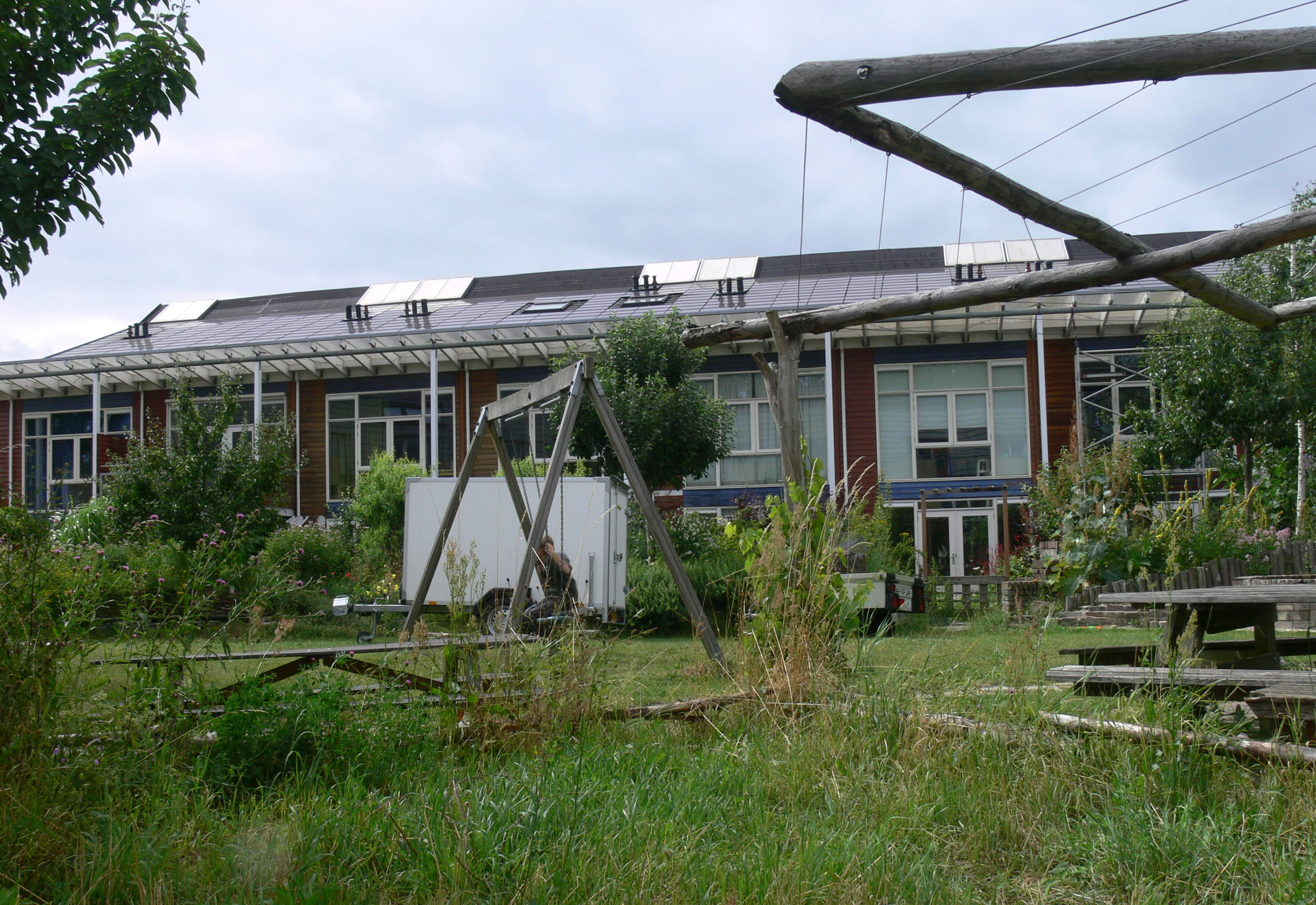 I previously described the efforts of artists to revive Detroit's infrastructure and economy.
Mental Masala has a very nice post describing the parallel efforts of farmers.
I love watching the abandoned, rusted-out husks of post-industrial cities reinvent themselves. Pittsburgh pulled it off and I'll bet we haven't heard the last of Detroit. It offers hope to similar cities across the Midwest and Mid-Atlantic.
h/t: the irresistible fleet of bicycles
Thursday, December 10, 2009
Farming Brooklyn's Rooftops
 I just discovered the blogs of Brooklyn Grange and Rooftop Farms.
I'll be keeping an eye on them!
h/t: the irresistible fleet of bicycles
Tuesday, November 17, 2009
"Eating Animals"
 I listened to Jonathan Safran Foer discuss his new book, Eating Animals, today on On Point.
What I've heard to date suggested he would be an irrational extremist, but on the radio at least, he was calm, logical and (when it came to the economics and logistics of agriculture) accurate.
He asserted that the treatment of animals in industrial agriculture falls below the ethical standards of all people, that people would be revolted if they actually understand how animals are treated and that the only solution is to become a vegetarian (as low-intensity agriculture isn't productive enough to keep 6 billion people in beef and chicken).
A lot of people seem to be freaking out about his book, but his appearance on the radio was reasoned, consistent and offered one possible answer to my question.
He said that he's never met someone who was a proponent of factory farms, but I think that may just reflect his social circles. I'm all for legislating the humane treatment of animals, but I don't think that's mutually exclusive with high intensity animal ag.
Monday, November 9, 2009
In Defense of Feedlots
 Could concentrated animal feeding operations (CAFOs) be the key to sustainability?
"As an example, one dozen eggs, transported several hundred miles to a grocery store in a tractor-trailer that can carry 23,400 dozen eggs is a more fuel-efficient, eco-friendly option than a dozen eggs purchased at a farmers’ market (4.5 times more fuel used) or local farm (17.2 times more fuel used)."hat tip: AgWired.
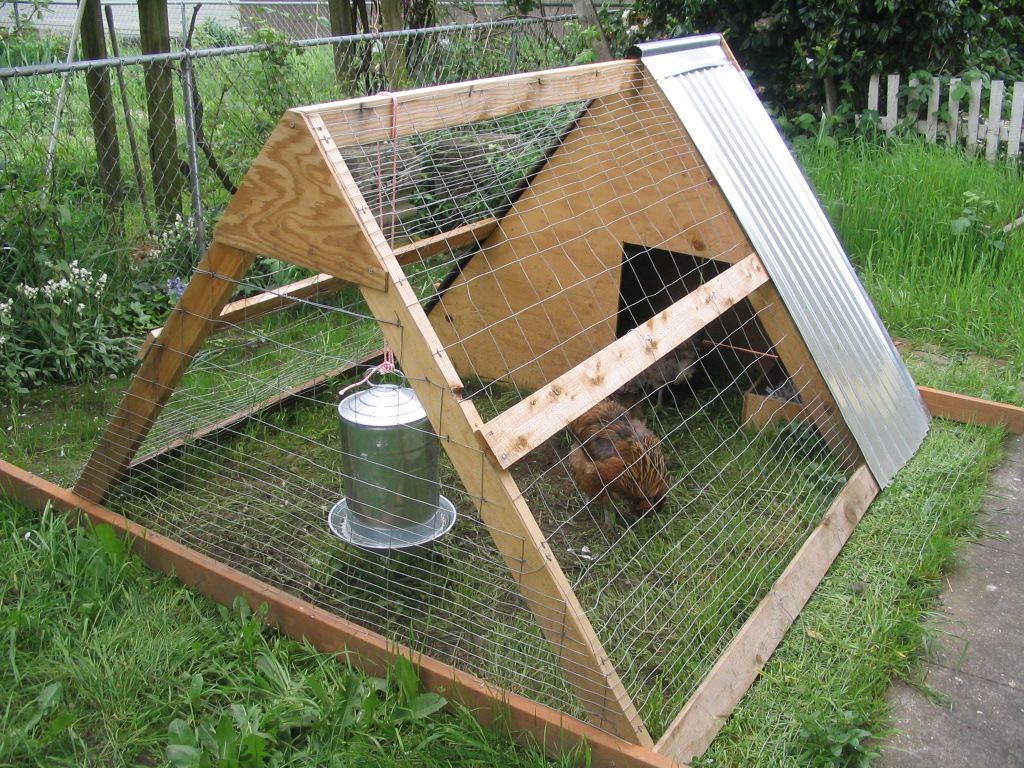 Meanwhile, in Kansas, urban pioneers try to bust city anti-ag ordinances.
hat tip: Ethicurean.
Saturday, October 10, 2009
Another Kink in Eating Local
 Somehow I missed this article from last year. In it, two professors from Carnegie Mellon describe how despite the enormous distances that modern foods are shipped, transportation as a whole accounts for only 11% of the total greenhouse gas emissions produced by agriculture. Delivery of finished food products to retail stores accounts for only 4% of the total emissions. They conclude that "buying local" is less effective in lowering our carbon footprint than shifting from red meat and dairy to less carbon-intensive poultry, fish and veggies.
The greater efficiency of concentrating agriculture in the best locations is reflected in Jeremy's post at Ag Biodiversity. Check out his stunning maps that illustrate the global distribution of farming in 1995 versus the concentration of agriculture in only the best locations (it's not clear if this is hypothetical or actual). Like any other industry, agriculture is most efficient when located where the competitive advantages lie (e.g. good soil, weather and cheap and available labor). Unlike other industries though, I think agriculture may be an industry that we should sacrifice some efficiency in order to maintain the robustness of a distributed network. No one will starve, overthrow their government or start a war if political or natural obstacles suddenly cut them off from iPod factories on the other side of the world...
I don't have the time (or probably the qualifications!) to dig into the authors' methods to see exactly how they calculated all this, but it's a good reminder of how unintuitive complex systems can be. It's easy to suggest aesthetically-pleasing ideas such as buying local, but the devil is in the details. As James points out, there's not even close to enough land surrounding major population centers like NYC or Philly to feed all the inhabitants within a "local" number of food miles - let alone the fact that very few crops are grown in many of these regions to begin with (e.g. pretty much just dairy in upstate NY). It's often more efficient to grow crops year-round in sunny Arizona or California, or in the deep soils of the Midwest (and ship them thousands of miles) than grow them locally in cool, short summers on rocky soil.
As a big fan of New Urbanism, I'd be happy to vote for legislation that encourages dense, mixed zoning with lots of subsidized parks (including garden plots and farms) in and around cities, but that's more a statement of aesthetic preference than of effective conservation. I think we would benefit from a more clear understanding of not only the facts involving the environmental and social impacts of modern agriculture, but also our personal motivations for our beliefs.
If some sort of concentrated feed lot system turns out to be the most environmentally-friendly form of beef production, would you advocate it?
Friday, August 7, 2009
Urban Farming part 2
 The radio's been buzzing this week with urban farming stories. and I mean urban farming. i.e. raising pigs and bees in vacant lots in Oakland fed with dumpster diving! and aquaculture fish in Milwaukee. and a story on urban bees!
Will Allen - Milwaukee
Novella Carpenter's new book Farm City - Oakland
one.
two.
three.
four.
Subscribe to:
Posts (Atom)
LinkWithin
