Showing posts with label slow food. Show all posts

Thursday, May 5, 2011

Opportunistic Gardening

It's amazing what you can accomplish with some reckless enthusiasm and an emergency shovel.

I've been out of grad school/postdoc for half a year now but have been slow to acclimate to my new budget. After spending 75 bucks to rent my garden plot, I couldn't help but balk at the idea of spending hundreds more on tools, containers, plants and fencing - so I started cutting corners.

Warning: irrational frugality will be a theme here...

Tuesday, February 15, 2011

New to Agriculture?

The Cornell Hort Blog just linked to the new Northeast Beginner Farmers Project website: 
"Do you wonder how other farmers breed pigs, process chickens and transplant seedlings? The new site features a growing selection of videos capturing experienced farmers and their successful production techniques in action. You’ll also find our popular library of video interviews with farmers sharing advice on profitability, choosing an enterprise, evaluating land, and much more."
Looks interesting! I'll definitely check it out more when I have extra time.

In the meantime, back to trying to find a CSA and community garden plots in the MD DC area... Any suggestions?

Tuesday, August 10, 2010

We(eat)ding

The dominance of weeds in our community garden plots is truly unbelievable. You'd be forgiven for mistaking the whole thing for a crop of oilseed rape. Although several of the plots are well-tended and fenced (can you see the fences?), the majority of the field is completely yellow with Brassica flowers.

Tuesday, April 13, 2010

The People's Garden

"The People's Garden Initiative is an effort by the United States Department of Agriculture (USDA) which challenges its employees to establish People's Gardens at USDA facilities worldwide or help communities create gardens. People's Gardens vary in size and type, but all have a common purpose - to benefit the community and incorporate sustainable practices."
One of the bosses at our local USDA station was chatting with his co-workers about this initiative. The latter suggested setting up a demonstration garden, but the former had a greater ambition: production.

With a small army and a little cash to cover field fees, we can knock out planting and harvesting in a day or two each and give thousands of pounds of food to our local food bank. The USDA allows its employees to volunteer their time for projects like this so we can even do it during the week.

We donated a ton of sweet corn, tomatoes and peppers last year but it didn't really seem like the best use of our efforts - a ton of fruit rotted in the field even with multiple harvest dates. This year we'll probably stick to less perishable staples like potatoes and winter squash - especially since we won't have money to spend on pesticide sprays or fences this year. We're hoping to set a precedent. Supposedly it's so well established in the Pacific division that all the stations compete to see who can give away the most food.

The boss is gonna ask for some advice on crops to grow from his contacts with the Detroit new farming movement.

Got any suggestions yourself?

Thursday, March 4, 2010

Eating Rabbits

Is rabbit the new chicken?
They're quieter and less smelly than chickens, make healthier meat, can be fed on kitchen scraps, are easier to slaughter (no squawking or plucking) and they reproduce like...hmm... well, they reproduce really fast.


Jeness once postulated that the tastiness of an animal is directly proportional to its cuteness. Accordingly, she joked that it was one of her life goals to try what surely must be the world's most delicious creature:
the sugar glider.

Maybe rabbits can tide us over.

Just in time for Easter!

h/t: City Farmer News

UPDATE: Another NY Times piece

Monday, February 22, 2010

(Ignore) Food Expiration Dates

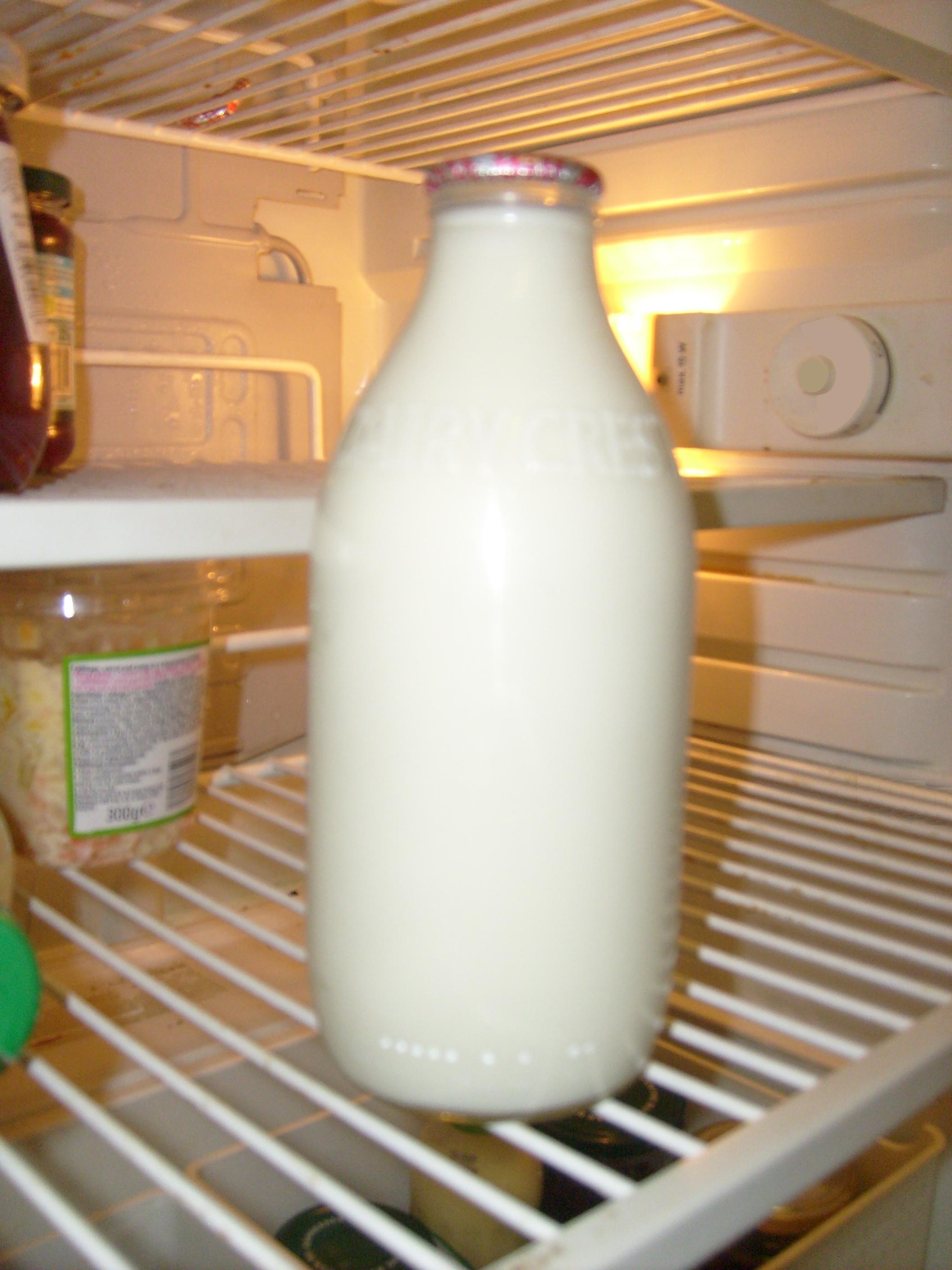
Talk of the Nation today discussed Nadia Arumugam's new piece at Slate, titled "Ignore Expiration Dates."

Apparently these dates are mostly set by the manufacturers with little to no direction from the Feds. She says they're generally set very conservatively to prevent dummies from drinking bad milk that they probably stored poorly in the first place.

She points out that you're perfectly capable of telling that your milk went bad and recommends you trust your senses over statistically calculated risk thresholds.

I guess this means I'm not a rebel for eating expired food all the time...

Tuesday, February 16, 2010

The Naked Pint [Book Review]

I just finished "The Naked Pint, an unadulterated guide to craft beer."

Christina and Hallie apparently wrote this book for an audience of hesitating female novices, reluctant to engage in the culturally-masculine world of craft brewed beer. I obviously wasn't won over by their frequent reassurances that I, the reader, wouldn't lose my femininity by being interested in beer, but it was a good book all the same.

They start out with the basics (what's malt? what're hops for? what's the difference between a lager and an ale?) and then launch into four chapters (the bulk of the book) exploring all the types and subtypes of beers, accompanied by some quintessential and unique examples of each. I learned a lot about different styles of beers here (and a lot that I felt like I already should have known).

I particularly like that they cite specific beers from specific breweries. It definitely gave me a greater awareness the next time I found myself staring at 6-packs in the grocery store.* They also spend a lot of time describing the flavors and scents that you should be able to detect in different beers if you like to be as serious with your beer as you are with your wine. I have a lousy palate so this was all lost on me, but it's a nice inclusion.

Towards the end of the book, they give extended instructions and recipes for keeping, serving (and brewing your own) beer. Overall, the book was an easy, quick read and I'd recommend it to anyone who wanted to cement their knowledge of the basics of beer production and styles.


*Unfortunately, I've found our upstate breweries to be pretty underwhelming (Ithaca and Saranac). Of course, if I didn't insist on shopping at the discount grocery store, I probably wouldn't have such a hard time finding Dogfish Head, New Belgium, Deschutes, etc. On the plus side, I've recently discovered Great Lakes, and have been pretty happy with them so far...

Saturday, February 13, 2010

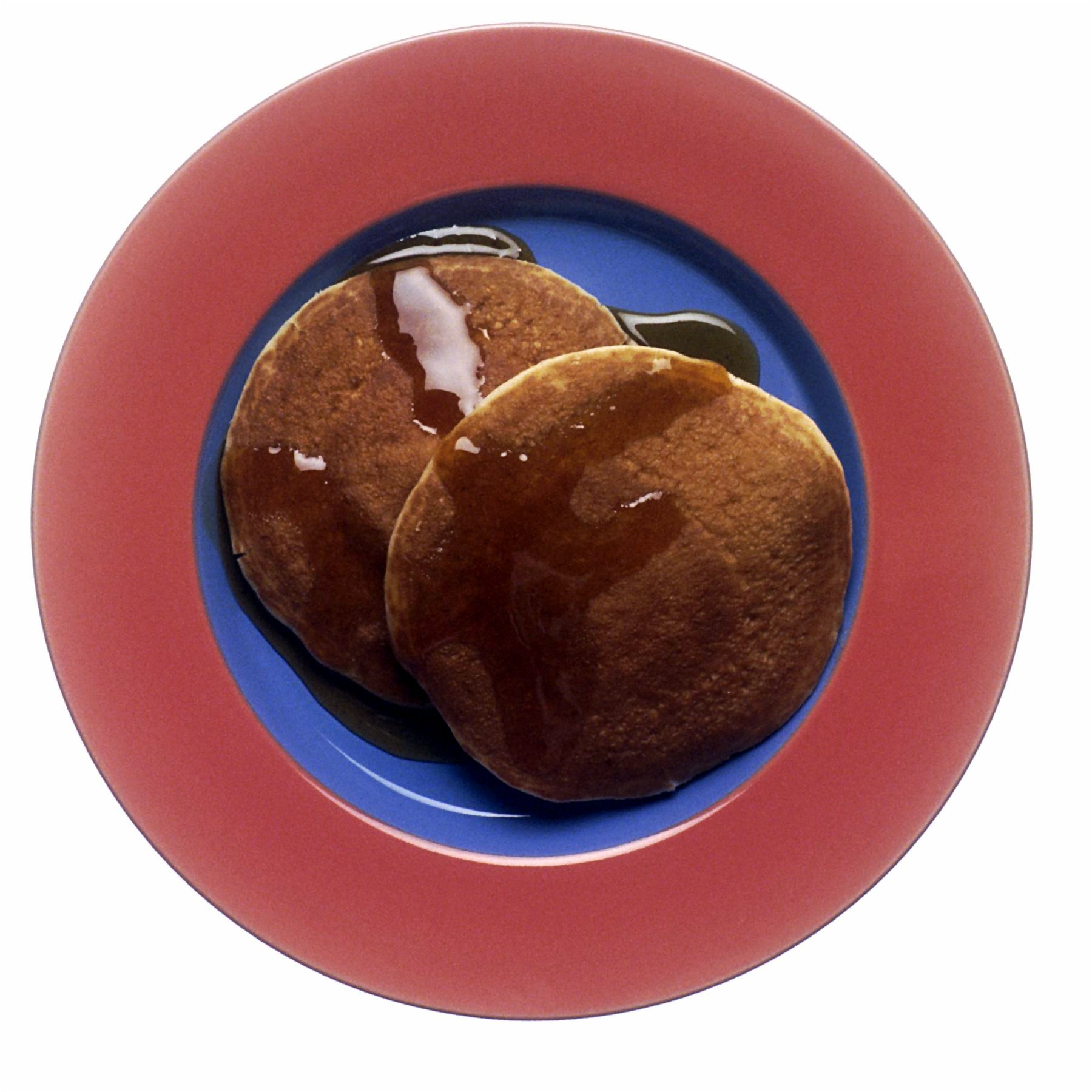
Pancake Patch

Gene Logsdon has been pushing the idea of grains as a garden crop for some time - a "pancake patch." For a gardener in the pursuit of extreme, high intensity gardening projects, this was immediately appealing - and I say ranks up there with growing bananas in Ohio.

I put his book, Small-Scale Grain Raising, on my library que some months ago, but some local dummy is sitting on his borrowed copy (there's no excuse, it's a very short book). I'll probably just buy a copy when I get some money.

The wind was knocked from my sails this past week however, when my boss pointed out a problem with my plan. He was on a homemade bread tangent when I started asking questions about the logistics of getting usable flour from raw grain. This led him to an anecdote about a local mill that was trying to sell some variety of "local, organic" bread flour. Shortly after it appeared on the shelves, the co-op was inundated with complaints regarding the poor baking quality of the flour.

The fruit quality of grasses, like any plant, is heavily impacted by the environment. Mills routinely test and mix different batches of grain to assure that the final flour product has appropriate levels of gluten, etc. This little local mill, which was only able to buy grain from one farmer its first year, was unable to correct quality imbalances and was forced to sell an inferior product. They hope to recruit additional farms in the new year.

I suppose this isn't a deal breaker - it just means that cereals aren't completely foolproof.

Hmm...
I bet a dwarf wheat variety would make a nice front "yard."

Sourdough FAIL

I've been making bread for awhile now without incident (with the world's easiest base recipe). I thought it would be a simple extension to establish a starter culture in lieu of relying on commercial yeast.

All over the Internet, it's stated that all you need to do is set out equal parts flour and water and natural yeast will colonize and froth it up - or you can dope it with bread yeast, or inoculate it with likely-colonized dried fruit (I did all this and also added some drops of dregs from wine and beer bottles).

Set out, and every day or so, dump half of it and replace with fresh water and flour to keep the happy fungi growing actively. I've spent half my professional life inside a sterile hood, culturing fungi, so this seemed pretty trivial. But it didn't work. Here is fresh dough mixed with a full cup of starter "culture" that smells faintly right but never rose. Any ideas what went wrong?

Wednesday, February 3, 2010

The Family "Dinner"

Uh, I just saw a commercial last night with the following arc:
1) Your kids won't become drug-addicted losers if you eat dinner as a family.
2) We know you can't eat dinner as a family now because you're too busy to cook.
3) So have a family dinner with "healthy" individual frozen meals from Stouffer's!
Wow, I'm blown away. I must be just completely out of touch because I never would have guessed the average American family not only never eats together, but also is too incompetent in the kitchen to make even a simple casserole.

If this is true it's gonna take some of the fun out of accusing other people of living in bubbles...

Wednesday, January 27, 2010

Hantz Farms of Detroit

Flying into Detroit at night a few weeks ago, it seemed much darker than it should have been - though I don't know if that was just my imagination.

At any rate, on the subject of the agricultural rebirth of this city, the Hantz financial group has invested in the "world's largest urban farm" in Detroit. They have a glossy website you can check out.

Wednesday, December 2, 2009

Experimental Apple Pie v.2

I'm new to baking but I've gotten a lot of practice this fall - and still haven't made a dent in the more than a bushel of apples, and 10-plus pounds of Long Island cheese pumpkin I bought a month ago ($15 at a farm stand clearance!).

A quick Google search and advice from a friend started me on a great apple pie recipe - though I'm not sure how it could taste bad with the amount of butter and sugar that's called for... At any rate, I tried leaving the skins on this time (since my apple sauce was much better with them). I'm happy with the result! Today's pie seems to taste more aromatic apple-y than previous ones and is largely dark red in the center, like pecan pie. Chewing on big pieces of skin wasn't a big deal, but I bet I wouldn't notice them at all if I cut each apple slice in two before baking.

I made bread from the cheese pumpkin before Thanksgiving and was happy with it (though I'm not sure it tasted any different than the canned stuff. This variety is supposedly the quintessential pie pumpkin and I was surprised that a fruit with such a dull, pink exterior could be so fluorescent orange on the inside. According to Wiki, it's actually a different species than "normal" pumpkins, Curcurbita pepo and maxima. Pumpkins, gourds, squash and zucchini are all just different varieties of a handful of species (the same way broccoli, cabbage and Brussels sprouts are all just different varieties of the same species). Cheese pumpkins, specifically, belong to the species C. moschata (along with butternut squash). At any rate, I'll be turning some of this frozen pumpkin into pie soon.

One way or another, I've got a few more prototypes to run through before I bring pies (and piles of apple butter!) to Christmas. Anyone have an easy gluten-free pie crust recipe?

Saturday, October 17, 2009

Cooking With Tomato Leaves

Here's a neat story from the New York Times about the presence of the poisonous alkaloid tomatine in tomato plants and the use of the possibly-toxic leaves in food.

Saturday, July 4, 2009

Why supermarket tomatoes have no taste

It's an old cliche that 'nothing tastes like a garden-fresh tomato.' The ones you find at the supermarket often seem to be hard, watery and tasteless.


The reasons can be summed up in two words: Industrial Agriculture.

Prior to the 1940s, when the U.S. was still a predominantly rural country, most people only ate food they and their neighbors could grow and store. If it didn't grow in your town or couldn't be kept canned, salted, dried or in a cool cellar, you rarely ate it. My great aunt once described how she and her siblings would often receive oranges as Christmas presents.

As the decades rolled by, Americans flooded into cities looking for opportunities, and flooded out into the suburbs with their new-found wealth. Much like today's organic and foodie enthusiasts, contemporary Americans were excited by the possibility of having a greater diversity of food for a greater proportion of the year. Truck farms sprang up in regions that benefited from mild climates and proximity to major urban centers. Huge quantities of fresh produce were produced in areas such as southern New Jersey (hence "The Garden State" and "Jersey tomatoes"), and shipped to nearby cities such as New York.

This huge demand for new and better varieties supported professional plant breeders who worked to increase the yields and stress tolerance of their favorite crops. Economies of scale rewarded growers who set up massive farms in warm climates with long growing seasons and shipped their product across the country as opposed to working locally with whatever resources were available. Plant breeders helped get more food to the people at an affordable price by focusing on producing varieties that could be harvested by machines and sit for long periods of time on trucks and grocery shelves before going bad. These new varieties were often less tasty than their ancestors, but they were available, inexpensive and an important source of healthy, diverse food for new urbanites.

Tomato is a particularly informative example. In the 1940s, a Cornell agricultural scientist discovered a natural mutation in his field tomatoes. One plant produced green fruit that refused to ripen. Over time it was discovered that this plant has a broken version of a gene that is a master regulator of ripening. A normal tomato plant has two good versions of this gene while a plant with two broken versions is ripening-inhibited (rin). A plant that has one good copy and one broken copy ripens very slowly and never quite becomes as flavorful as a normal tomato - but it can be shipped long distances and stored for long periods of time without rotting into ketchup. These hybrids represent a very large proportion of supermarket tomatoes.

Now that consumers are demanding higher quality in addition to availability, plant breeders and agronomists are working hard to create new varieties and growing practices that supply people with the best tasting and most nutritious foods they can at a reasonable price.

LinkWithin

Related Posts with Thumbnails