Showing posts with label chemistry. Show all posts

Wednesday, April 27, 2011

Wednesday Links

  1. Man, oh man. Possibly the coolest website ever and more chemical ecology than I know what to do with (and here's another).  h/t OrchidGrownMan from Biofortified
  2. Open source Legos for grownups. Can I have a microtractor? or a microcombine? or a dimensional sawmill? Pleeeease?
  3. More scientific sour grapes. Why won't grad students sacrifice their entire careers to do what we think is important?
  4. And, as always, maps! This time, watch agriculture spread.  h/t Seed.Feed.Food

Tuesday, March 22, 2011

Better Chemistry Through Breeding

I recently had the opportunity to visit the fabled heart of the USDA-ARS empire: Beltsville.

I heard all about the tornado that knocked down all the campus trees, smashed in the greenhouses and threw doors down hallways a few years ago, visited their food sensory lab (a controlled environment where fruit samples are passed through a wall to waiting taste testers), and saw greenhouses packed full of cacao (where research on one of my favorite fungi, Crinipellis perniciosa, is co-funded by M&M Mars Inc.).

But I was there mostly to visit the pepper breeding program.

Saturday, February 19, 2011

GM Vegetable Oil

Hooray for Seed Today helping me to clear another story out of my "drafts" folder!

How GM Overcame Soy's Fatal Flaw

It's an exciting time in genetic engineering! I've long been bored by the simplicity of our contemporary transgenic crops and the single-minded focus on agronomic traits. Dropping in an herbicide or pest resistance gene is good for the environment and the farmer, but it doesn't visibly benefit the consumer very much and just doesn't impress me technically. Now, Monsanto and Pioneer's new soybean varieties are heralding a new era of more sophisticated metabolic engineering of traits that will directly benefit the public.

Tuesday, December 21, 2010

Ergot in the Rye

Stopping at the charity field on the way back from pollinating, I noticed a ripening rye cover crop the next field over - and decided to look for my friend, ergot.*

I couldn't believe my luck! There were little black pods sprouting from rye spikes all over the edge of the field. This is a very exciting creature to a plant pathologist - and one that's had quite an impact on European history...

Monday, August 23, 2010

HFCS! iiieeeeee!!!!

I've been wondering what the deal is with health and high fructose corn syrup. Luckily, the blog Science-Based Medicine has done my homework for me.

The author relates that "a diet high in fructose has been shown to cause — or at least contribute to — hyperlipidemia, obesity, insulin resistance and cardiac disease." Cautioning that not only HFCS contains fructose, he summarizes:

Wednesday, July 7, 2010

Tobacco!

Humans sure love tobacco. It's the world's most widely-grown non-food crop (117 countries) and exists as 1500 varieties in the USDA database alone.

It's also one of the most-studied and best understood of all plants. 3,000 chemicals have been identified in the plant itself and 4,000 have been identified in its smoke!

Nicotiana tabacum is the main commercially-grown species and is thought to be descended from some combination of wild species such as N. sylvestris (the gardener's woodland/night-scented tobacco). Many of these wild Nicotiana species, which are found around the world, are also able to accumulate nicotine and related alkaloids just like N. tabacum.


Friday, June 11, 2010

Is Sunberry Poisonous?

Sunberry (aka Wonderberry) is a little purple berry in the nightshade family (Solanaceae), bred by Luther Burbank himself 100 years ago (Solanum guinense x villosum). I grew it last year both on my deck and in my research plot alongside another novelty purple-berried Solanum, Garden Huckleberry (S. melanocerasum or scabrum?).

The taxonomy of this family is far from figured out. Tomato (which you'd think we'd understand pretty well!) was removed from the genus "Lycopersicon" to join its potato and eggplant sisters in "Solanum" just a few years ago. The various species of "nightshade" are a total mess - no less because it's one of those names that Europeans threw around pretty loosely as they discovered new plants.

Monday, May 24, 2010

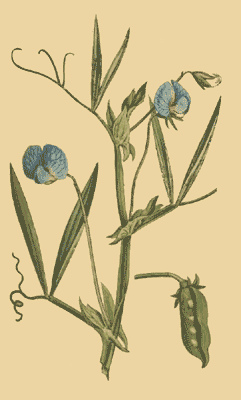
Beware the Grass Pea

There's been a big uptick in grass pea consumption in recent years - with accompanying paralysis (especially in children).

Grass pea (Lathyrus sativus*) is a crop of last resort. It's commonly grown from Southwest Asia through the eastern Horn of Africa, where it's mostly used as livestock forage. It has tremendous resilience in the face of environmental stress and pestilence and is often the only thing left standing after severe droughts and civil wars. Grass peas taste good, are full of protein, can grow in terrible soil and fix nitrogen, however, they also produce a potent neurotoxin, ODAP, which causes paralysis of the lower limbs when consumed in excess over extended periods.

It's a real tragedy, but thankfully it's one that science and crop biodiversity can do something about.

ICARDA, a research station of the international agricultural science organization, CGIAR, is working on screening germplasm from all over the region to find locally-adapted landraces with very low levels of ODAP. When I first heard about this story, I wondered why they didn't just use mutation breeding or genetic engineering to knock out the toxin altogether instead of just trying to find low-toxin ones, but apparently the toxin plays an important role in the grass pea's stress tolerance.

It's a pretty simple project that could make a really big difference.

*Sweet pea is in this genus

Friday, February 19, 2010

I love the smell of geosmin in the morning!

I got around to watering the struggling figs in my dark apartment last night and was soon immersed in the scent of geosmin.

The first time I encountered the name of this chemical was in a college microbiology class. We were instructed to choose a prokaryotic microbe, go out and find it in the real world and then give a presentation on our isolated specimen. Kyle and I lucked out with our slime mold-like Myxobacterium - we only had to hunt for rabbit droppings to culture it. One of our classmates finally found his Vibrio in a rotting squid carcass (and then had to use a really complicated culturing medium to get it out!).

The actinomycete pair was giving their presentation when the specimen's Petri plate made it to my row. We were instructed to smell the culture, which was thick with volatile geosmin. It's funny how smells can evoke such sudden, visceral memories. For me, this smell instantly summoned orchid potting bark. It's also the reason some people are disgusted that beets taste like "dirt," and last weekend I detected it in some Thai black sweet sticky rice.

It's amazing how single chemicals can manifest such powerful and complex summaries of our experiences. I remember my old labmate showing off his most recent hexanal sample, which he said smelled like perfume. Its scent immediately struck me with the notion of rotting fruit, which puzzled me as I tried to identify its source.

Bananas!

I would have thought that a single isolated scent chemical from banana would smell as "natural" as banana soda - that our sensory impression of something as complex as a fruit would also be complex - but in this case, a single chemical pretty much summed it up. The same thing happened when he showed my that his octenol sample smelled just like mushrooms (whose volatile emissions, incidentally contain almost exclusively octenol)! Maybe it's true what was reported recently - that humans are incapable of perceiving more than a few chemicals at a time (contrary to the effusions of sommeliers!).

Sometimes there's not really a line between what's "natural" and "synthetic."*


*An alternate example? Howabout the "Grapple," which if rhymed with "apple" gives a better insinuation of it's taste than the long "a" the producer wants you to use. They're just low quality apples soaked in the dominant chemical responsible for the flavor of grapes - and are an abomination that tastes more like "purple" than "grape!"

Thursday, February 11, 2010

The $17,000 Glass Vial

The scientist across the hall poked his head into my office today. He's a natural products chemist, which means he spends his time trying to identify and isolate new compounds with interesting biological activity from all kinds of crazy organisms.

He held up a little glass vial that appeared to envelop a faint coating of dust. It almost looked like someone had just scratched up the inside of the vial with a metal pick.

He informed me that this compound he had painstakingly isolated could be bought from a chemical supply company for hundreds of dollars a milligram.* The amount of dust he had collected inside that little vial would be worth $17,000!
He joked that if he did this part time, he could afford to hire a postdoc.

"Or just go buy a car!"

"Not a great one..."

*1 gram = 1,000 milligrams

Tuesday, January 26, 2010

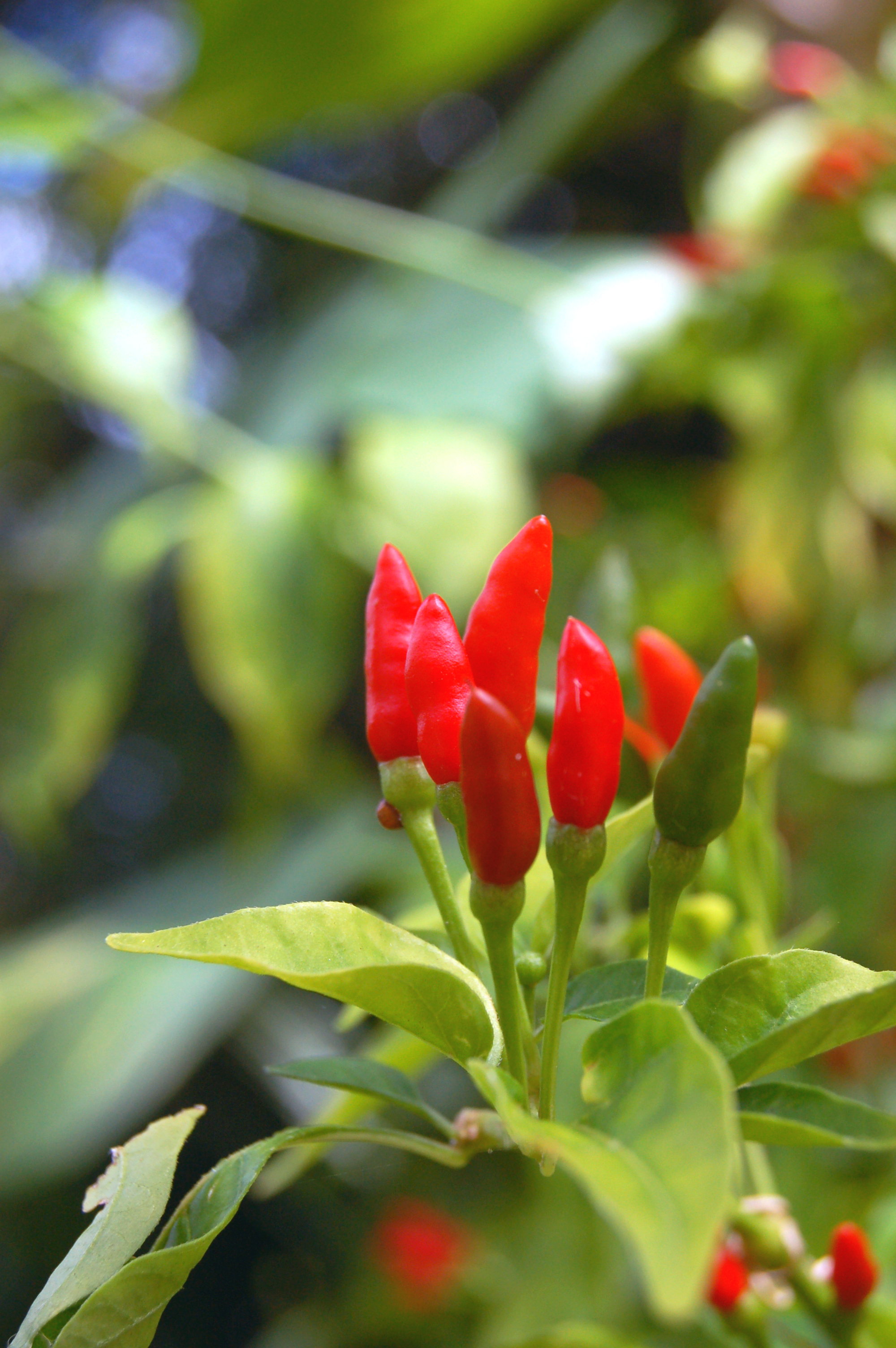
HOT Pepper! [UPDATE]

Violent coughing exploded from the adjoining lab as my labmate aspirated vannilnamide.

Step 3 in our pipeline to analyze the chemistry of fruit is to crush them into dry, frozen powder in what amounts to a $1,000 coffee grinder - often accompanied by a puff of nitrogen gas carrying fruit juice aerosols. If we had processed the sunberries earlier (which produced purple clouds of vapor that stained any nearby textiles), we may have known to grind the chili pepper samples in the chemical fume hood...

Grinding 10 grams of those tiny little chilies gassed our laboratory pretty effectively. As my labmate fought to catch her breath, I moved the apparatus to the fume hood and my boss opened the windows. It was pretty amazing how just being in that room for the next 10 minutes affected your eyes, mouth, nose and throat. Fun fact: humans also have hot pepper chemical receptors in their lungs! My boss joked that he know knew what it felt like to be a thief/bear (who got sprayed with mace).

My boss had described my previous experience with these chilies to our resident pepper breeder/geneticist. I was disappointed to hear that our "wild C. eximium" pepper accession actually shares morphological and DNA sequence characteristics with C. frutescens, and is almost certainly domesticated. Apparently C. frutescens accessions either have small, pungent fruit or large, nonpungent ones - ours obviously is the former.

The breeder also said that he knew which specific chemical must have been dominant in our accession based on the way its pungency built slowly in the back of my mouth. As I was searching the Internet for more examples of different chili chemicals with different properties, I stumbled across Mike's Pepper Garden, which describes the capsaicinoid family of chemicals in depth.

Thursday, November 19, 2009

HOT Pepper!

The secondary focus of my research is the comparative metabolomics of the Solanaceae (i.e. I'm seeing what kinds of chemicals are present in different fruits in the nightshade family).

Our 2009 Upstate summer was waaay too cool and short for a number of our more tropical species and landraces* so I dug up and moved a dozen or so of them to the greenhouse to finish up. Our Latin/South-American chilies are finally about done.

I'm especially intrigued by our accession of Capsicum eximium, which is, as far as I know, a completely wild, undomesticated pepper. I would figure that it wouldn't be particularly hot or flavorful since these are among the first traits that humans improve when they start saving seed.

In the wild, peppers "want" to be eaten by birds (which digest the fruit without hurting the seeds) over mammals (which tend to chew the seeds to death) so they produce capsaicinoids, super spicy chemicals that only mammals can taste!

A recent PNAS study found that spicy subpopulations of a wild chili were attacked less by insects and a pathogenic fungus than less spicy subpopulations. Although this would suggest that peppers can protect their seeds from fungi and animals by being hot, the authors' previous study also found that plants that produced lots of capsaicinoids tended to have thinner seed coats - which are more vulnerable to animal digestion. The authors suggest that these selective pressures favor a population with mixed levels of spice. I would imagine that when peppers are routinely spicy, mammals would learn not to eat them, allowing some individuals to enjoy the benefits of thick seed coats (better germination after bird consumption) without suffering losses to mammalian herbivory (due to low spice).

As I collected the tiny, glossy red C. eximium fruit, I remarked to my co-worker that they looked like little candies. (Ironically, our yellow-fruited Peruvian aji variety is actually named "dulce.")
"Should I try one?"
My coworker laughed at me for the suggestion. I popped one into my mouth: a thin, shriveled little fruit less than half an inch long.
"It's like chewing on a piece of bark... there's no flavor at all....
oh wait! it's really flavorful!.. and a little hot!
it's pretty hot. hmm, it's getting hotter. uh, it might be really hot...
uh oh....."
I spat out the pepper and laughed as the spice burned across my tongue, which eventually went a little numb. I looked around, regretting I was away from my desk.
"Is this [greenhouse spigot] water "industrial" or can I drink it??"
It wasn't the hottest pepper I've ever eaten: that was one I mistook for a snow pea pod that left me flushed, out of breath and (for more than an hour) with a burnt throat.**

It was incredible though that a pepper as small as C. eximium's could be that HOT! I never would have guessed. I would need many dozens of them to equal the weight of a habanero or jalapeno (which aren't big peppers to begin with) It was really good too! Very flavorful. Would be great for chili.


* I have to plug Johnny's Seeds here. This "employee-owned" seed company operates out of Maine and produces appropriately cold-adapted varieties. We had tremendous yields out of multiple varieties of pepper and eggplant (which are notoriously cold-intolerant) in spite of our unusually cold and short, Northern summer. Our wild and heirloom varieties (that we got elsewhere) were a complete failure as of September.

** I feel that I should put this in the perspective that I love spicy food more than almost anyone I know. My mom never cooked spicy food when I was a kid, but I was known in my family for eating salads that were "gray" with black pepper and I want any restaurant cook who's cooking my Mexican or SE Asian food to feel personally challenged that they can't make it too spicy.

Tuesday, November 17, 2009

"Eating Animals"

I listened to Jonathan Safran Foer discuss his new book, Eating Animals, today on On Point.

What I've heard to date suggested he would be an irrational extremist, but on the radio at least, he was calm, logical and (when it came to the economics and logistics of agriculture) accurate.

He asserted that the treatment of animals in industrial agriculture falls below the ethical standards of all people, that people would be revolted if they actually understand how animals are treated and that the only solution is to become a vegetarian (as low-intensity agriculture isn't productive enough to keep 6 billion people in beef and chicken).

A lot of people seem to be freaking out about his book, but his appearance on the radio was reasoned, consistent and offered one possible answer to my question.

He said that he's never met someone who was a proponent of factory farms, but I think that may just reflect his social circles. I'm all for legislating the humane treatment of animals, but I don't think that's mutually exclusive with high intensity animal ag.

Thursday, October 22, 2009

Flowering Bulbs and the Atom Bomb

Our local colchicums bloomed recently (at least before it started snowing)...

Colchicum is a genus of flowering bulbs that's native to the Mediterranean coast. This picture shows Colchicum autumnale, aka the "autumn crocus," which, predictably, blooms in the fall and looks like a crocus.

This genus is also known for producing the poisonous alkaloid, colchicine. Used in various traditional remedies, this chemical has anti-inflammatory properties and prevents cell division by (for those of you who remember your basic biology) binding to tubulin and therefore preventing the assembly of the microtubule scaffolding required for mitosis.

The ability of this chemical to prevent cell division (but not DNA replication) can also be used to double the number of chromosomes within a plant cell, which has various applications in plant breeding. Although we can now use genetic engineering to add, remove or change genes in pretty much any way we want, traditionally, the only way to find new versions of genes (and therefore new phenotypic traits) was to wait for one to mutate naturally or use chemical tricks to induce mutations.

Many of our most important grain varieties were intentionally mutated with chemicals and ionizing radiation half a century ago. Because the mutations are random, they sickened or killed almost all of the exposed seedlings, but, just like occurs with natural selection, a few happened to change in beneficial ways. One such induced mutation is dwarfism, which produces short, strong plants that can carry heavy seed heads without falling over. In addition to mutating plants within controlled laboratory experiments, one of my professors told me that they actually left bags of wheat and corn seed on the decks of test ships (like those in this picture) when the U.S. government tested the atom bomb on Bikini Atoll!


Some activists have begun to refer to these mutated plants as "hidden GMOs." However, unlike true genetic engineering, "mutation breeding" breaks DNA in exactly the same types of ways that produce natural mutations - it's just much faster.

Over 2,500 of our crop varieties have been improved with this "mutation breeding." Currently many companies are using this technique to generate novel genetic diversity while avoiding the stigma and regulatory obstacles associated with genetic engineering - especially for crops like sunflower, which are often planted within pollination range of their wild relatives.

Saturday, October 17, 2009

Cooking With Tomato Leaves

Here's a neat story from the New York Times about the presence of the poisonous alkaloid tomatine in tomato plants and the use of the possibly-toxic leaves in food.

Wednesday, October 7, 2009

Too Much of a Good Thing

I saw this link on David Tribe's blog.

Free radicals (e.g. reactive oxygen species) are highly reactive chemicals that play various biological roles, including acting as signaling molecules. They're most famous though for reacting with (and breaking) cellular machinery (due to their highly-reactive unpaired electron) and contributing to cellular stress and disease. Antioxidants deactivate radicals, and therefore protect native proteins, lipids, DNA, etc.

The article cited above describes a new study that found that reactive oxygen species appear to play a protective role against Type II Diabetes. The implication is that consuming too many antioxidants (e.g. loading up on vitamins) may backfire.

This just goes to show how much we don't know about how our foods affect our health (and why I don't believe in vitamins). I'm just going to keep eating a reasonably diverse diet and not worry about the consequences.

Friday, August 28, 2009

Farm to Food Bank

One of the best things about working in agricultural research is the steady stream of fresh, leftover produce that accumulates in our hallways as experimental fields are harvested.


We are currently swimming in an absurd sea of extra sweet corn.

Luckily, the food bank agreed to accept perishable food. Our local USDA lab donated a few thousand pounds of potatoes to the food bank last year. This year, the government big bosses are again generously allowing employees to donate their work hours to glean harvested experimental fields. So 3 USDA employees, my boss and I headed out for a few hours this morning and picked several hundred pounds of sweet corn. The guy who orchestrated the delivery said it would all be given out by the end of the afternoon!

Highlights of the day?
My boss pointed out that individual leaves of some of the harvested corn plants were intensely purple. The entire plant this late in the season is doing nothing but making sugar at a breakneck pace and shoving it as fast as possible into the ears (for reproduction!). When you pick an ear, the plant is still shoving huge amounts of sugar into that (now empty) node. The plant deals with this huge surplus of sugar by conjugating the sugar molecules to anthocyanidin molecules, and stuffing them into the cells' central storage vacuoles within the nearest leaf. Anthocyanidins + Sugars = Anthocyanins, which are brightly colored pigments!

Later on, I was popping off ears, checking for corn borer damage and tossing them into bins when I noticed a splash of bright red on one of the husks. I showed it to the guy next to me, wondering if it was some weird fungal growth. He said it was blood from an animal - which I laughed at since, although corn leaves are notoriously sharp, it was too bright to be any older than a minute or two. Then the guy on my other side pointed out the blood pooling in my right hand!

Corn is sharp!

(I'm fine and I left those ears for the deer by the way)

Monday, August 24, 2009

Corn v. Western Corn Root Worm

A group in Germany has recently used genetic engineering to integrate an ecologically-based pest resistance into corn.

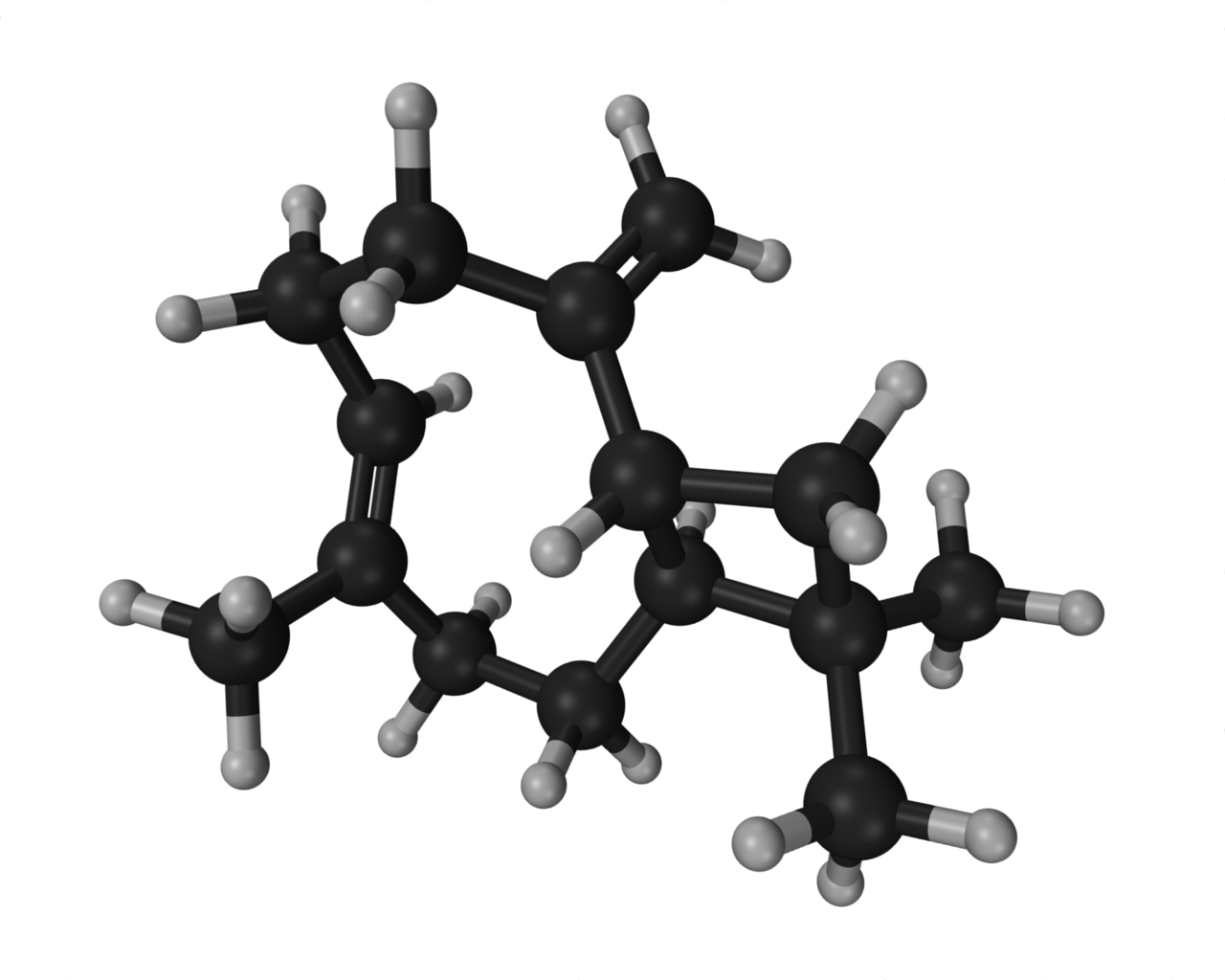
They cut the gene for (E)-beta-caryophyllene synthase out of an oregano plant and pasted it into a corn plant. This allowed the corn to produce (E)-beta-caryophyllene, a volatile scent chemical. This chemical has been shown to attract insect-eating entomopathogenic nematodes, which arrive to feed on an important corn root pest, the western corn root worm. Fighting pests with their natural enemies is a tactic known as biological control. Biological control is one of the key components of IPM (integrated pest management), an ecological-based strategy that aims to reduce pests to an economically-acceptable level, as opposed to scorched-earth eradication.

The really neat part of this story is that old varieties of corn made this chemical naturally - and European varieties still do. It's a natural consequence of plant breeding that you only keep traits you value very highly (and can detect!). If you grew your breeding lines in a field without adequate populations of both the insect and the nematode, you'd have no way of knowing that some of your plants contained a resistance trait.

A similar story shaped the modern rose. In the Middle Ages, roses were largely appreciated for their scent, but as generations of plant breeders created bigger and more colorful flowers, the genes for scent were lost. A few laboratory groups are now working on restoring the rose's scent through genetic engineering approaches similar to the above.

It would take years to move this natural corn gene back into North American varieties with traditional breeding techniques. The same thing could be done in a few months with genetic engineering techniques, but would probably require years and millions of dollars worth of regulatory tests. Either way, I hope it happens. I'm a big fan of technologies that encourage farmers to tend to the ecological integrity of their farms. Biological control doesn't do any good if you kill all the good bugs.

Degenhardt et al. 2009. Restoring a maize root signal that attracts insect-killing nematodes to control a major pest. PNAS August 3.

Wednesday, August 19, 2009

Yellow vs. White Corn

I spent today pollinating maize. My reward was an armful of sweet corn! (currently boiling...)

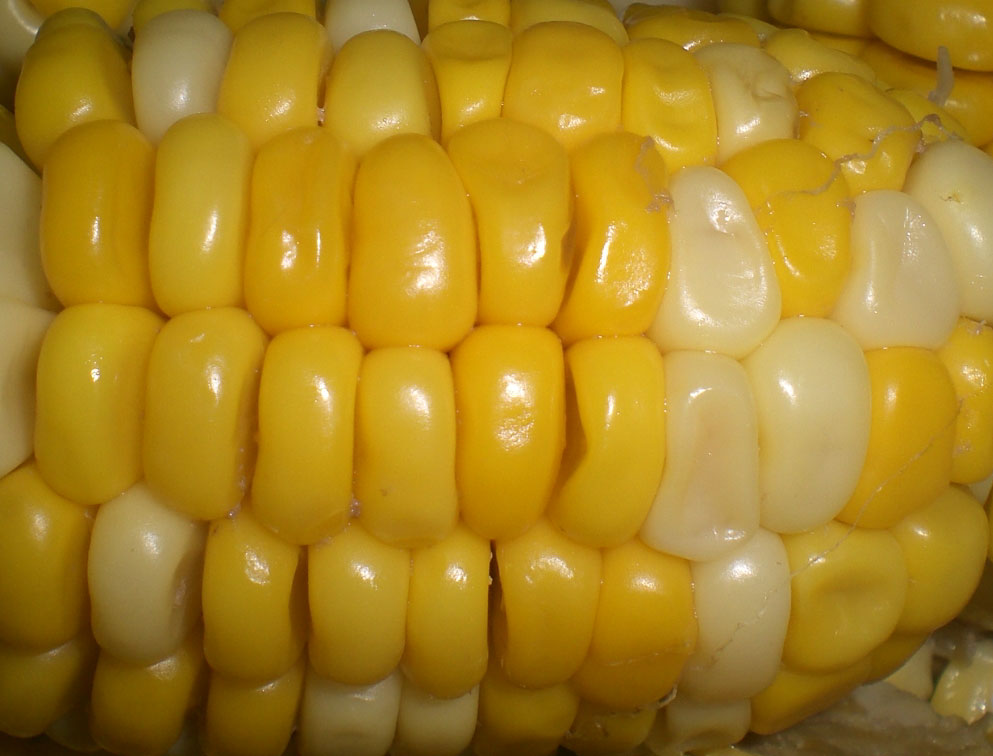
Like the picture to the right, today's ears contain a mix of white and yellow kernels.


The yellow of maize kernels (along with most yellows, oranges and reds of other fruit) is caused by the accumulation of carotenoids. This chemical class has often been associated with human health and includes such famous members as lycopene and beta-carotene.

One particular enzyme, phytoene synthase, plays a particularly important role in the accumulation of carotenoids. Maize has two different versions of this gene - one for synthesizing carotenoids in the kernel endosperm, and the other for synthesizing it everywhere else. White kernels lack a functional copy of the former phytoene synthase gene, and therefore aren't able to accumulate (yellow) carotenoids.

Ultimately, the color is determined by the combination of the mother plant's genotype in addition to the genotype of the individual pollen grain that fertilized each kernel.

LinkWithin

Related Posts with Thumbnails