

Showing posts with label evolution. Show all posts
Showing posts with label evolution. Show all posts
Tuesday, January 31, 2012
Herbicide Resistant Johnsongrass: Coming soon to a farm near you!

Monday, September 5, 2011
Evolution of Fruit Shape in Tomato

But for now we barely understand how natural morphological variation is controlled. So I was excited to see this paper out of the van der Knaap and Francis labs. In it, they review some of the known levers by which tomato plants control fruit shape and investigate their historical appearance.
Saturday, January 22, 2011
Weekend Short Stories
Some pretty cool links for your weekend:
Jurassic Park beer:
Fossil Fuels Brewing Co. makes beer with an Eocene-era yeast, formerly encased in a 45 million year old chunk of amber! Incredible, but apparently true. Viable Bacillus spores were discovered first in 25-40 million year old amber by Raul Cano (these spores are so tough you can't kill them with an autoclave). He then founded a startup (Ambergene) with the hopes of discovering ancient antibiotics (this was back during the natural products craze - when pharma companies sent explorers to coral reefs, rainforests and geothermal hot pools to find new biologically-active chemicals. Now, most just do combinatorial synthetic chemistry). The company failed, but when you can't make money, make beer! h/t: AncientFoods
Living off the land:
The Resilient Gardener teaches us how to be subsistence farmers in a temperate climate: corn, potatoes, beans, squash and eggs. h/t: Living the Frugal Life
A reason to like kale:
Organisms can optimize their fitness by reproducing early when times are good and holding back and focusing on survival when times are bad (if your population is about to experience an involuntary bottleneck, offspring born afterwards will contribute proportionally more genes to the population). This Week in Evolution discusses the reproductive advantages that an organism would accrue if it could delay reproduction specifically in times of environmental stress.* In PLoS one, Will Ratcliff cites examples of creatures from yeast to rats showing increased longevity (and delayed reproduction) when exposed to minor environmental stresses (calorie restriction, temperature stresses, low dose toxins).** They hypothesize that the consumption of "famine foods" (e.g. low calorie and nutrition and moderate toxicity) would be an effective cue for an organism to switch to survival mode.
and Maps!
The U.S. by last names, but why no Italians?***
An incredible morphing cartogram displays everything
The world according to Americans
Intriguing, yet almost impenetrable
Jurassic Park beer:
Living off the land:
The Resilient Gardener teaches us how to be subsistence farmers in a temperate climate: corn, potatoes, beans, squash and eggs. h/t: Living the Frugal Life
A reason to like kale:
Organisms can optimize their fitness by reproducing early when times are good and holding back and focusing on survival when times are bad (if your population is about to experience an involuntary bottleneck, offspring born afterwards will contribute proportionally more genes to the population). This Week in Evolution discusses the reproductive advantages that an organism would accrue if it could delay reproduction specifically in times of environmental stress.* In PLoS one, Will Ratcliff cites examples of creatures from yeast to rats showing increased longevity (and delayed reproduction) when exposed to minor environmental stresses (calorie restriction, temperature stresses, low dose toxins).** They hypothesize that the consumption of "famine foods" (e.g. low calorie and nutrition and moderate toxicity) would be an effective cue for an organism to switch to survival mode.
"Plants high in insect-repelling toxins might be an example of such "famine foods", even if some modern humans have developed a taste for kale, coffee, or hot peppers. These plant toxins might have small negative effects on our health. But, if our bodies respond to the information carried by those toxins -- famine! population decline likely! delay reproduction! -- then those negative effects may be outweighed by the health benefits of setting our hormone levels etc. to values optimized for longevity rather than reproduction."
and Maps!
The U.S. by last names, but why no Italians?***
An incredible morphing cartogram displays everything
The world according to Americans
Intriguing, yet almost impenetrable
* Not to be confused with my long-favorite, TWIS.
** Whom I played in a band with out of the very-Davis J St Coop
*** I assume this map is more biased by the redundancy by which different cultures reuse the same names than the spatial scale at which the immigrant populations currently dominate.
Ratcliff, W., Hawthorne, P., Travisano, M., & Denison, R. (2009). When Stress Predicts a Shrinking Gene Pool, Trading Early Reproduction for Longevity Can Increase Fitness, Even with Lower Fecundity PLoS ONE, 4 (6) DOI: 10.1371/journal.pone.0006055
Cano, R., & Borucki, M. (1995). Revival and identification of bacterial spores in 25- to 40-million-year-old Dominican amber Science, 268 (5213), 1060-1064 DOI: 10.1126/science.7538699
Ratcliff, W., Hawthorne, P., Travisano, M., & Denison, R. (2009). When Stress Predicts a Shrinking Gene Pool, Trading Early Reproduction for Longevity Can Increase Fitness, Even with Lower Fecundity PLoS ONE, 4 (6) DOI: 10.1371/journal.pone.0006055
Cano, R., & Borucki, M. (1995). Revival and identification of bacterial spores in 25- to 40-million-year-old Dominican amber Science, 268 (5213), 1060-1064 DOI: 10.1126/science.7538699
Friday, August 20, 2010
Evolving Pesticide Resistance
 It's been estimated that genetic resistance to every pesticide that will ever be invented already exists in some microbe in some field, somewhere in the world (simply because there are so many individuals of each species). If you invent an incredible new spray that kills, say, Phytophthora infestans, you'd know that somewhere in the world there is a little P. infestans mycelium or spore that is already resistant. If you start spraying thousands and thousands of acres with your new pesticide, you may have a season or a few without late blight, but it's only a matter of time before this little guy gets into your field and finds a smorgasbord all for himself.
Tuesday, August 3, 2010
Development FAIL
 We've had lots of 90F days in the field and the corn is popping! I've heard that at the height of a Midwestern summer, the corn grows so fast you can literally hear the plants popping (as air spaces in the internodes open up).
Upstate NY isn't exactly in the record-breaking 300 bushel club (and in fact a lot of our corn gets fed to dairy cattle whether it produces grain or not) but we've been very busy de-tasseling and pollinating all the same.*
Tuesday, May 11, 2010
Girls make better Gatherers
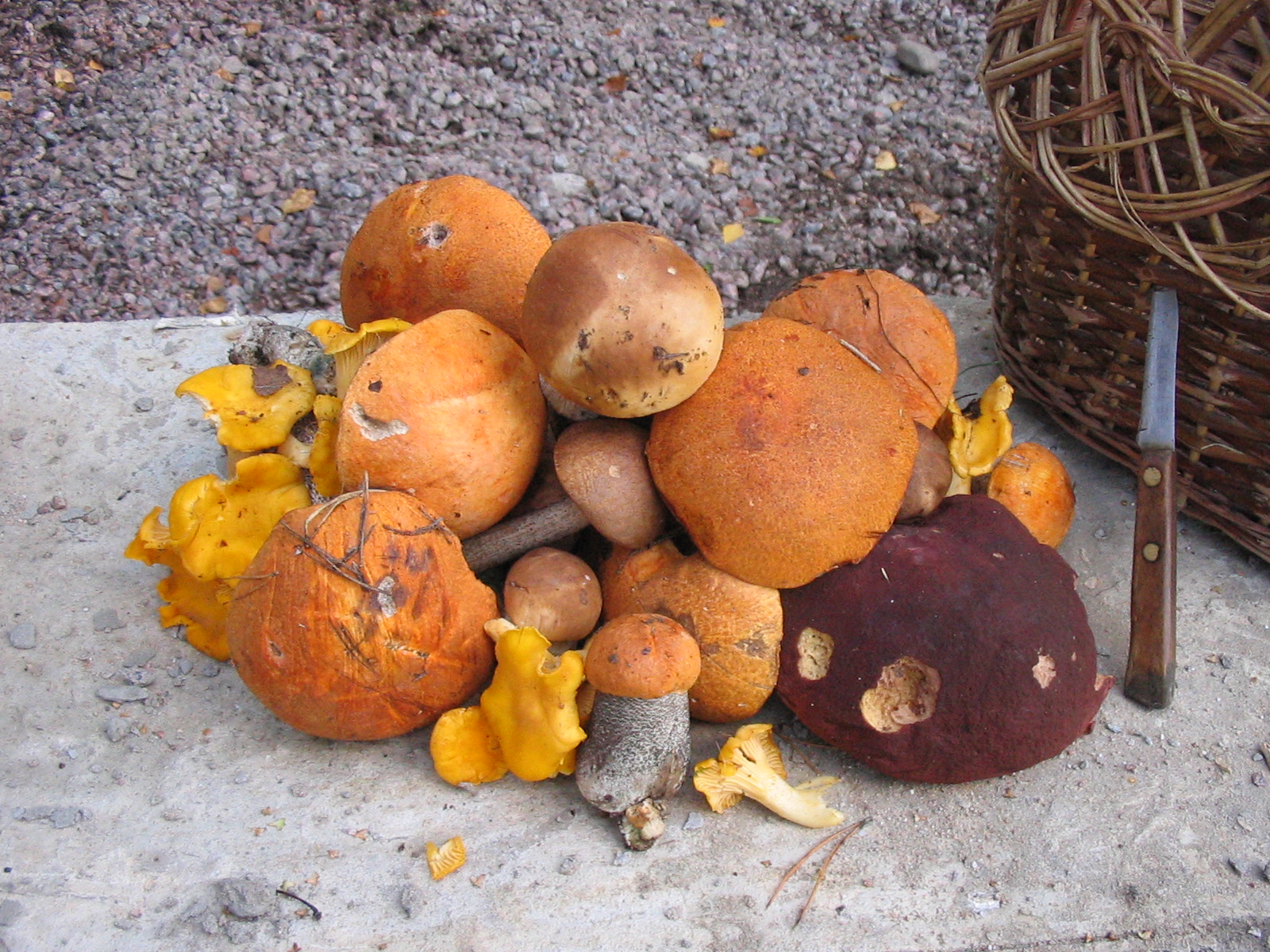 Though men may be better at reading maps and finding randomly hidden objects, a new study suggests that women are better at remembering routes to known objects - i.e. men are better at hunting and women are better at gathering.
The study has a neat design: they saddled pairs of indigenous Mexican men and women with GPS and activity monitors and then sent them out to collect mushrooms. Women were much more efficient foragers - they collected the same amount of mushrooms as the men but used a whole lot less energy (because they presumably knew where they were going). Women also found a greater variety of mushrooms from more sites (collecting from small patches of mushrooms). Meanwhile, the men ran all up and down the mountain, wasting a ton of energy looking for motherlodes.*
I'm always a little skeptical of these evo-psych Just So Stories, but it's interesting all the same (and it matches my personal experience!).
h/t: MycoRant
*Hopefully they controlled for confounders - e.g. how much time men and women usually spend mushroom hunting in this society. I don't have access to the article...
Saturday, March 6, 2010
Living like a Caveman
 I got a kick out of a recent NY Times piece that described some modern "cavemen" living in NYC. This tribe of mostly young, white-collar dudes has made a pretty serious hobby out of trying to expose their bodies to the same stresses that our ancestors regularly encountered. They enjoy fasting, intense bouts of aerobic exercise and gorging on organ meat. They also regularly give blood (to further simulate the hunt) and like to run barefoot - all while living in one of the most intensely urban and "unnatural" settlements humans have ever produced.
Underlying their philosophy is the concept that our bodies are best adapted to an ancient hunter-gatherer lifestyle and (implicitly to many) our current way of life is making us sick and unhappy. This has been a contentious idea for generations, with plenty of big shots weighing in (Stephen J. Gould thought modern humans are mismatched to their environment).
In The Evolutionary Search for our Perfect Past, Zuk dismisses this idea that we all would be healthier and happier if we weren't stuck behind our computers eating bread all day as a "paleofantasy."
In The 10,000 Year Explosion, Cochran and Harpending argue that the intense selective pressures of civilization caused remarkable bursts in human evolution. Lactose tolerance was the secret weapon of the Mongols and other nomads, who spread this trait each time they ransacked a village, and who evaporated into the steppe (surviving on milk, meat and blood) until avenging imperial forces exhausted their cereal supplies. They also assert that generations of inbreeding and relegation to the "dirty" book keeping jobs of the Middle Ages made the Ashkenazi Jews super smart.
In On Deep History and the Brain, Smail reconciles these ideas to some extent as he explores how closely biology and culture are entwined, suggesting that the development of our brains and bodies may be more plastic to our environment than we realize - and that many explanations of adaptation simply amount to just-so stories. For example, although pop psychologists like to suggest that men are only attracted to young (fertile) women, and women are only attracted to older (rich and supportive) men, modern hunter-gatherers don't fit this pattern. Besides, the typical hunter-gatherer child gets almost all his calories from his mom's gathering and when his dad does have a successful hunt, the meat is usually distributed evenly among the tribe - with any extra usually going to the man's girlfriend instead of his wife. Likewise, women don't rely on the husband for help with child care - that's what her family and boyfriend are for...
Well, if nothing else, I'm sure good food and exercise won't ever be maladaptive!
Friday, December 11, 2009
"We Are What Our Ancestors Ate"
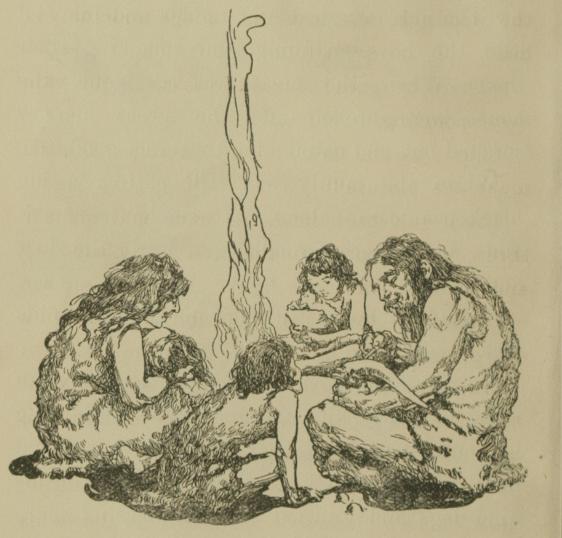 Evolutionary biologists discussed the ideal human diet at a recent meeting.
Our ancestors enjoyed a range of diets - from generally omnivorous australopithecines, through Homo species that increasingly specialized in large game, to the incredible variety of diets that creative H. sapiens cultures have come up.
These regional diets have left imprints on their descendants. This article discusses how people of warm lowlands (e.g. the Pima of the American Southwest) may have developed slow metabolisms to withstand famine and heat while people from cold climates (e.g. the Saami of Norway or Quechua of Peru) may have developed fast metabolisms to convert fat to energy efficiently. All peoples suffer when exposed to the modern Western diet, but the extent to which they develop specific diseases (e.g. obesity, diabetes, high cholesterol or heart disease) depends on their biological history.
There's no shortage of debate over exactly what characterized the Paleolithic diet for humans in different times and places, but I guess there's consensus in the paraphrase:
"More meat, Fewer carbs, No milk."I especially like how this article brings the academic discussion back down to Earth:
"Others noted that even if one paleodiet proves particularly healthy, it would be hard for people in different cultures to comply with it. "Food is identity," says Ungar. "You can't tell an Eastern European Jew to eat pork" or an Italian to skip pasta. The bottom line, says Leonard, is that although some diets are better than others, "there isn't a perfect diet that is the same for everyone. The nature of our success is to find and make a meal in virtually any environment. But our different responses are structured by the basic biology we bring to the table.""h/t: John Hawks Weblog
Friday, November 27, 2009
Osage Oranges
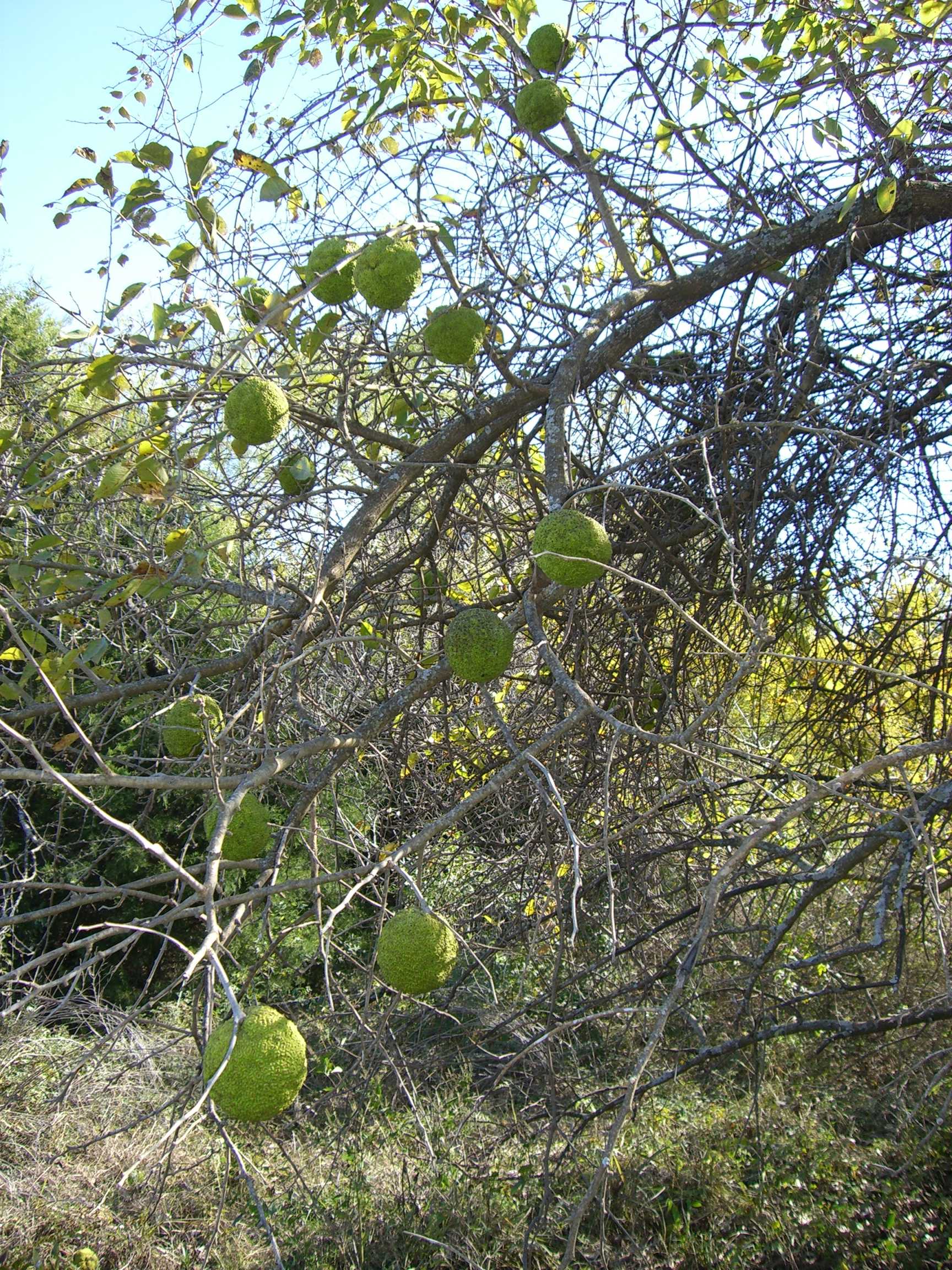 Osage oranges are probably the most interesting thing I saw in the ~ 1,000 miles I've driven so far this week (that and that Hokies *really* like to decorate their cars).
The lime-green, softball-sized fruit littered the ground along backroads (particularly in West Virginia), where these normally nondescript trees grow in crowded rows of rusty, cluttered branches. These trees were commonly planted as thorny hedgerows in the 1800s, prior to the invention of barbed wire. Maybe the trees I saw were the remnants of old fences.
It's been hypothesized that the fruit of this tree were once dispersed by extinct North American ground sloth, elephant or horse species. There are a few giant fruit species that appear to have lost their co-evolved animal disperser (e.g. avocado, prickly pear and papaya). These marooned plants are sometimes referred to as "anachronisms." There's pretty good evidence that ground sloths were the natural disperser of Joshua trees in the American Southwest. Their extinction is leaving these plants in the lurch as climate change slowly moves their habitat away.
Native to Texas, Osage orange was one of the species planted throughout the Midwest and Great Plains by the U.S. government during the Great Depression to improve the environment and give the unemployed something to do. One of my friends once told me that tons of (now very large) walnut trees remain on marginal land in Indiana. I guess most people have forgot about them, but their high quality wood is ripe for harvest.
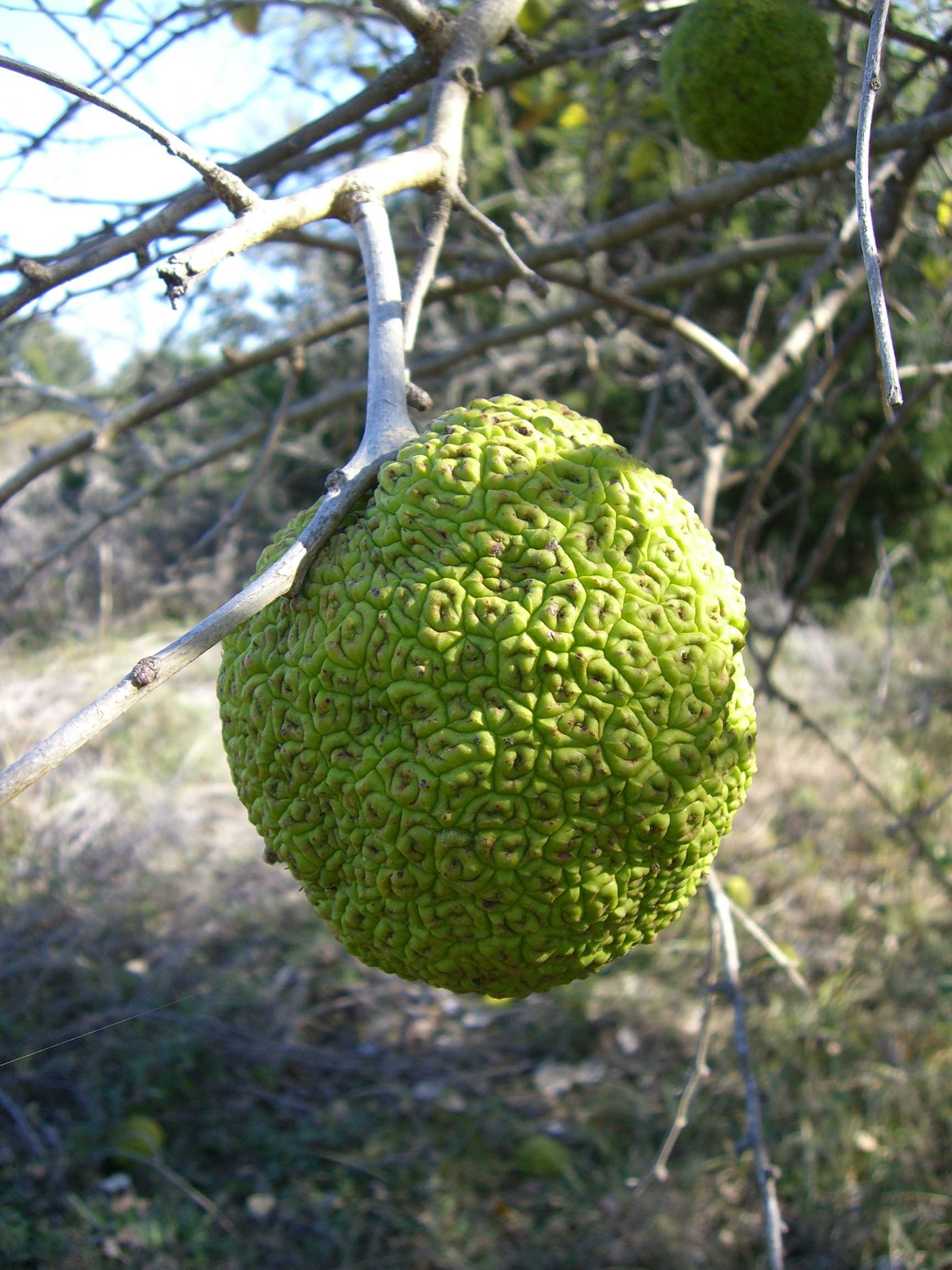 The twisted old Osage orange in my parents' yard finally keeled over this fall. Half the root system was dead but the thing still appeared to be alive when it began to shed its leaves a few weeks later. My siblings and I had some fun trying to cut into one of its fruits when we were young. Those things are impossibly sticky. I remember it took us about an hour to work our way into it with one of my mom's kitchen knives, which she was then forced to throw out.
My parents have been losing a lot of the old trees that I grew up with. According to their arborist, their soil has too many boulders to allow the trees adequate purchase. Tulip trees are springing up in place of a lot of non-natives, which is a pretty good trade. A couple old walnuts, a Paulownia and a massive cherry (the largest I've ever seen, ~4' dbh*) are on their slow way out. Good specimens of these species can be worth thousands of dollars in lumber and veneer wood. I've been egging my parents into trying to sell them before they completely collapse, but they're no doubt too gnarled and heartrotted to be worth anything.
A quick Google search suggests that no one has any interest in harvesting yard trees anyway. In addition to poor dimensions, urban trees are often filled with old nails, screws and fence wire - which may have become invisibly entombed a hundred years ago, but can kill when the mill saw encounters them.
*dbh = diameter at breast height (a standard forestry metric)
Wednesday, November 25, 2009
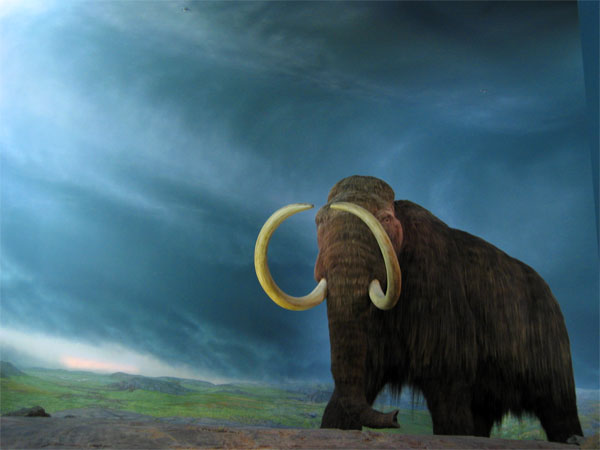
Wooly Mammoth Hunting Licenses
 RE-POST FROM 2.2008*
I came across an encouraging article on the USDA-ARS website. They describe a project to develop perennial warm and cool season grasses to supply ranchers on the Great Plains with forage for their cattle year-round. Many of these varieties are based on native species, improved for standard agronomic traits such as ease of seed collection. Grass-fed beef is relatively green as it doesn't require fossil fuel-intensive corn and soybean feed and doesn't produce burdensome concentrations of manure**. The American prairie co-evolved with numerous (mostly extinct) herbivores in the first place, and in the end a grassland grazed by cattle isn't much different than one grazed by bison.
This reminded me of this old letter to Nature from a few years ago (Re-wilding North America). The authors argued that we could simultaneously restore North American ecosystems and conserve endangered species by introducing animals such as elephants, camels and lions to open preserves in the United States. North America had many native large mammals prior to human colonization (including several elephant, horse, camel and lion species). It's likely that the late colonization of humans with sophisticated technology drove this whole class of animals to extinction here as it had in Australia. The introduction of similar species from Africa, in their minds, would restore our native ecosystems to a more pristine and functional state (for example, they point out that the pronghorn antelope probably co-evolved closely with the now-extinct American cheetah).
I think their most interesting argument is that this project could increase the public's dedication to preserving wild lands in general. They cite that more people visit the San Diego zoo's wild animal park each year than the National Park system. They propose that humans have an innate aesthetic interest in watching large herbivores and that the dedication of new wildlife parks could be justified by introducing these animals (many hunting ranches are apparently already stocked with such animals in Texas). These new parks could be established in economically depressed regions to simultaneously benefit local communities and justify the preservation of large tracts of undeveloped land.
This reminds me of the recent Pennsylvania Wilds project, which was created to bring tourism dollars to rural PA, and largely revolves around the re-introduction of elk (for watching and highly-coveted hunting licenses). I think we should take this a step further. Cloning technology will soon*** allow us to produce reasonable facsimiles of many of the large mammals that our ancestors recently drove to extinction. It seems to me that if the United States can make room for wild populations of wolves, bears, bison and moose then it could certainly support other similar, formerly extinct species... or at least the likes of passenger pigeons. These resurrected organisms won't be identical to the animals we drove to extinction thousands of years ago. More often than not, they will be rough behavioral and morphological hybrids with existing species. I don't see why this should be a deal-breaker though. The authors of the Nature paper point out that the highly acclaimed re-establishment of the extinct Midwest peregrine falcon was really done by breeding other peregrine falcon subspecies from around the world. Not the same thing, but still very much worth it.
I think the reintroduction of charismatic extinct animals and the dedication of new wildlife parks could really energize the public to value wild lands and the lifestyle choices that preserve them. With all the inaction-inducing guilt usually associated with environmental awareness, I think it could be worth it to show that extinction isn't always forever.
*Because I spent all night writing a post about Osage oranges and realized I wanted to link to this idea. I have a few re-posts in queue from my old grad school blog (where I mostly complained about being in grad school)
**yeah, but inefficient = expensive
***Well, I think 10-15 years is an okay guess. The nitty gritty challenges of synthesizing and assembling large genomes are pretty daunting, but JCVI is making some impressive progress.
Monday, November 23, 2009
The Omnivore's Advantage
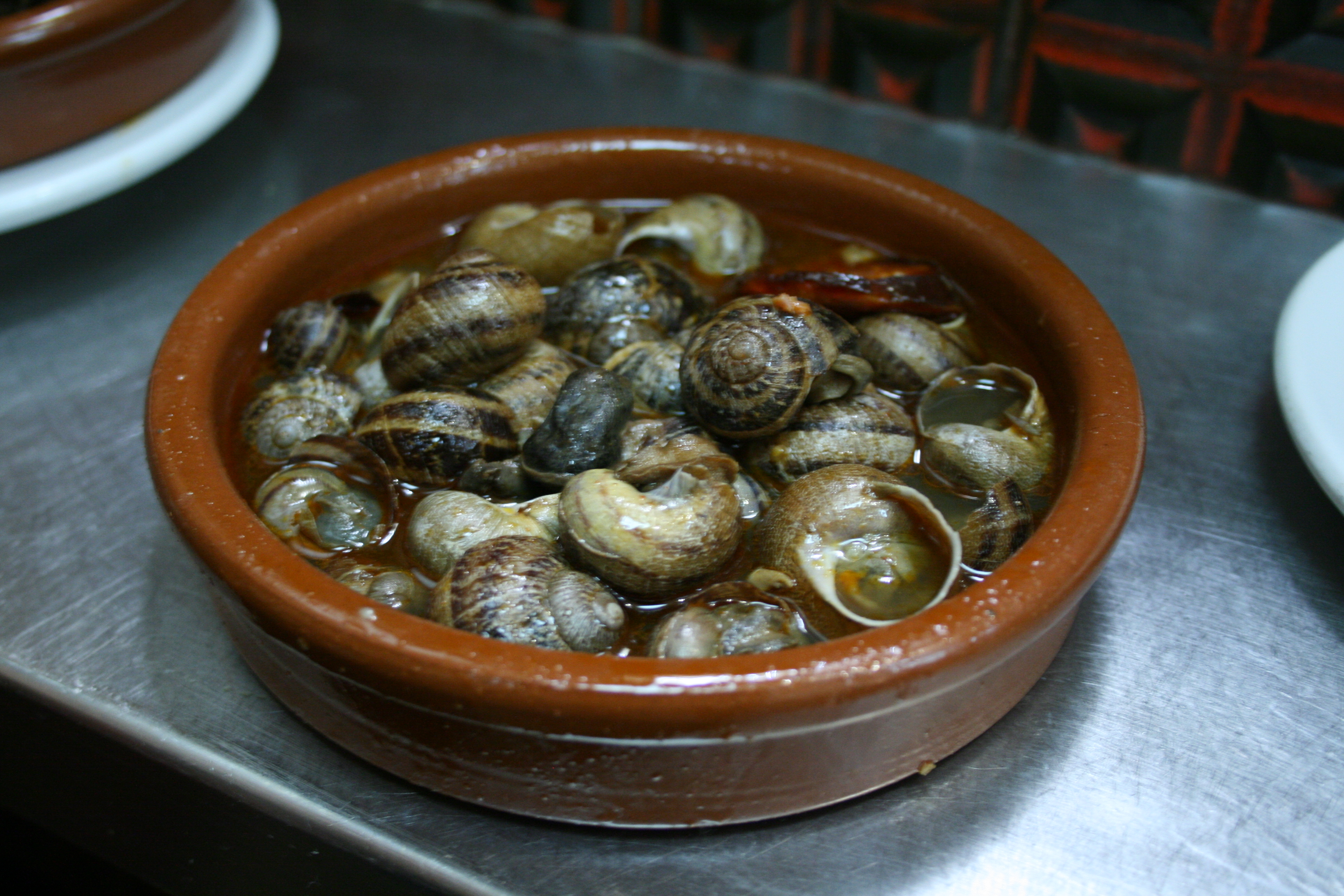 I learned something pretty fascinating on Nova's "Becoming Human" series. You can watch it for free here.*
Many hypotheses have been suggested to explain how our species (H. sapiens) replaced neanderthals (our sister species, H. neanderthalensis) - e.g. we killed/out-competed them because we're just so smart and have such amazing technology and rich social lives. The scientists interviewed by Nova also put forth an idea I hadn't heard before that is both less self-serving and more interesting - we may have driven the neanderthals to extinction with our omnivory.**
According to the interviewed scientists, neanderthals were carnivores, adapted to hunt big game with handheld spears in social bands (possibly with effective language). In addition to oft-cited human technological skills (e.g. a handful of javelins is much safer and more efficient than a spear) and social skills (e.g. sophisticated language), humans had skinny bodies that required far less food. It's been estimated that the heavy stature, large brains and cold environment of neanderthals likely required 5,000 calories a day!
I would imagine that an incredibly effective way to drive a specialist animal (like neanderthal) to extinction would be to introduce a similar, generalist species (humans) that could eat just about anything - but preferred the same food the specialist ate.
Neanderthals (like wolves) would have been forced to follow migrating game. The additional pressure of climate change (e.g. repetitive ice ages) would affect the abundance and distribution of prey species dramatically. Normally, it should be fairly simple for a predator to follow changing game distributions around a small continent, but humans could upset this balance.
Picture a small, warm valley in Northern Europe that supported enough deer, wild cattle and sheep to support a band of neanderthals. If they reproduced too much (or another band of neanderthals moved in), the now-unsustainable harvest of prey would force them to disperse to better hunting grounds, and in time, with relaxed predation, the prey would likely repopulate the valley.
But if a band of humans moved in, they may not only help over-harvest the big game, but also refuse to leave when the game ran out. Maybe there's still good year-round living to be made on rabbits, seeds, fish, grubs and berries. And while they're out gathering, they'd certainly help themselves to any of the (now rare) big game that they came across.
While neanderthals were wandering around Europe, becoming increasingly desperate, humans may have been getting fat and having babies.
It also was pretty interesting to hear how climate change in general seemed to shape our species and how our culture and technology radically changed our relationship with our environment. I thought it was pretty fascinating to hear that megafauna extinction was correlated with date of first human arrival. Large African animals weren't driven to extinction because they co-evolved with humans and only a few large European and Middle Eastern animals (e.g. neanderthals) were driven to extinction since they first ran into us relatively early. Large animals in North America and Australia were discovered suddenly by extremely modern humans and were apparently wiped out accordingly.
Finally, it occurred to me that almost all the animals that we routinely compare ourselves to (e.g. most medical research animals and livestock) share something in common that's different from us - they're all adapted to temperate and Mediterranean climates. Humans, on the other hand, are a tropical species. The Nova series also touched on a unique human adaptation that would surprise many of us. Humans are one of the only species on the planet capable of being active in extreme heat. Most animals are forced to rest to try to stay cool during hot, 100+ degree days. Although it's very uncomfortable and we use up a tremendous amount of water in the process, we're perfectly capable of remaining active.
This is seen in the practice of persistence hunting, which has been proposed to have been practiced by our ancestors in Africa and still occurs today. This strategy simply involves walking up to some large animal (like a big antelope) during the hottest part of a tropical summer day, and then tracking it after it runs away. The hunters repeatedly catch up to and scare off their prey (which, by the way, amounts to running a marathon under a 100+ degree sun). The prey never has a chance to rest long enough to cool off and eventually becomes incapacitated by overheating and is easily killed. Appropriately, humans are also adapted to long-distance running. I suppose any of us could still train to do this, though our light color phase individuals would get a bit of a sunburn...
The interviewed scientists also emphasized that while humans have existed for a relatively short time compared to other Homo species, our species appears to be uniquely flexible and adaptable. I wonder if this extends to our diet? I seem to remember hearing about a Pacific Northwest Native American group subsisting almost exclusively on mussels, and didn't the Mongols create one of history's greatest empires mostly on meat, milk and blood? Not to mention the heavily industrialized foods that many of us consume today. It kinda seems to me that humans can thrive on pretty much whatever food's available (not that all contribute equally to a long, enjoyable life!).
Think of our omnivory when you eat this week.
Happy Thanksgiving!
*Thanks for the open access, Nova!
**I'm in no way a paleontologist, so feel free to point out any errors
Sunday, October 18, 2009
Paw Paws!
 Whenever I wandered through the hills and swampy bottomlands during my youth, I always kept an eye out for pawpaws. I never found one of these fascinating North American "bananas" until today - at our University orchard store.
Asimina triloba is a small understorey tree graced with large, dark green leaves that allude to the primarily tropical home of its family. The pawpaw received its name from an early Spanish explorer who confused this plant with the tropical papaya.
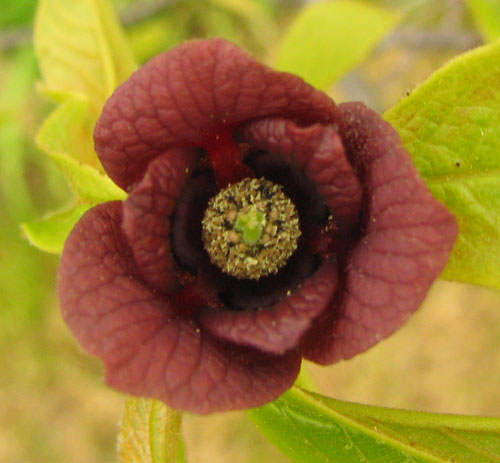 In spring, pawpaws produce small, maroon flowers. Although these flowers contain both male and female parts, they are self-incompatible. Some botanists estimate that fewer than 1% of flowers ever produce fruit! Inefficient pollination (plus poor storage properties) limit commercial production of this fruit.
(although Kentucky State is working hard to change this)
Poor pollination efficiency may also arise from the evolutionary strategy that the pawpaw takes. Some flowers in the pawpaw family (e.g. white-flowered Asimina species) pursue an "honest, rewards-based" strategy, exuding sweet-smelling, fruity scents that attract and feed beetles. Maroon-flowered species (like the pawpaw itself), instead exude fermented/decaying scents, mimicking rotting meat in an effort to trick flies into pollination. Some farmers have attempted to attract more flies by hanging rotting meat from their trees! (but hand pollination is recommended).

 I left the green fruits in a paper bag to ripen until they were mostly black and smelled faintly of pineapple and licorice. Like thin-skinned avocados, the inside of the fruit contained a few large seeds and a custard-like fruit that tasted kinda like mango.
I put the seeds in the fridge to see if I can break dormancy and germinate them.
Charles Fergus. Trees of Pennsylvania and the Northeast. 2002.
Tuesday, August 25, 2009
What was "Natural" before Humans?
 Environmentalism, to most people, means protecting the Earth's pristine ecosystems from the defiling impacts of humans. The problem is that these ecosystems never existed in a stable, "pristine" state.
A recent article in Science discusses this in addition to the difficulty of even knowing what these ecosystems "originally" looked like.
From a North American perspective, ecologists have traditionally looked to the writings of European pioneers in order to ascertain the original state of the continent's ecosystems. We've learned since that the Native Americans heavily manipulated these ecosystems (while living in surprisingly large, organized civilizations). One of their most dramatic tools was the prescribed burn. In the wooded Mid-Atlantic and Northeast, these burns selected for fire-resistant species, most notably nut trees such as oaks, which produced food both directly for humans, and indirectly, by supporting game species. As we speak, these "natural" oak forests are increasingly being overtaken by fire-sensitive species (e.g. maples) that are more tolerant of shade and compete better within intact forests - which more likely represents the state of these forests before humans.
Similarly, concern arose in Yosemite National Park recently as trees began to die of fungal root rots - often collapsing onto buildings in the process. These dense forests hardly resembled those encountered by European travelers over a century earlier - when an oxcart could easily be driven between trees. Fire was again the explanation. With this human-selective pressure removed, the forests reverted to a common Western conifer disease cycle. Shade-intolerant tree species are increasingly out-competed by shade-tolerant species (that are susceptible to fungi). When enough of these shade-tolerant, but susceptible trees accumulate, root rot epidemics take hold and expand each year - leaving open land for the shade-intolerant species to recolonize.
Even when paleontological techniques have been applied to identify ecosystem parameters before any humans were present, the picture remains fuzzy. Currently, North American forests are known for existing in certain combinations of key species (e.g. oak-hickory, oak-hickory-pine, beech-maple and maple-basswood). When ancient deposits of pollen were analyzed, it was found that many of these ecosystems had different combinations of dominant trees in the past. We're still living in a period of oscillating ice ages and interglacial periods. North American ecosystems retreated south each time glaciers advanced and expanded north again as temperatures increased. Because each species has unique tolerances of not only temperature, but also soil type and rainfall, they all shuffled and re-assorted with the changing climate.
The author specifically points to the Big Woods of Minnesota, which apparently formed on the site of a great savanna-prairie around 1300 C.E. as successive years of drought reduced fire fuel load, allowing trees to invade the grasslands. Ironically, these forests are now being changed again as earthworms are re-invading (very slowly!) since the glaciers last wiped them out. Many of these "invasive" earthworms were formerly native!
I think environmentalists who are too hung up on the "restoration" of ecosystems do a disservice to conservation as a whole. It's important to understand how our activities impact the Earth's ecosystems, but not all these changes are necessarily negative. One day we'll all be gone and the Earth will evolve completely new organisms and ecosystems just fine without us - so there's no moral argument to "protect" ecosystems. The environment is only valuable to the extent that humans assign it value. I propose we take a practical approach:
1) Maximize the environment's ecosystem services
e.g. invasive zebra mussels are cleaning up Lake Michigan
2) Work to restore culturally-important ecosystems
e.g. breeding blight-resistant chestnut trees
3) Stop worrying so much
It just prevents the average citizen from taking action
Subscribe to:
Posts (Atom)
LinkWithin
