Showing posts with label biotech. Show all posts

Friday, August 24, 2012

Monsanto's GM Drought Tolerant Corn


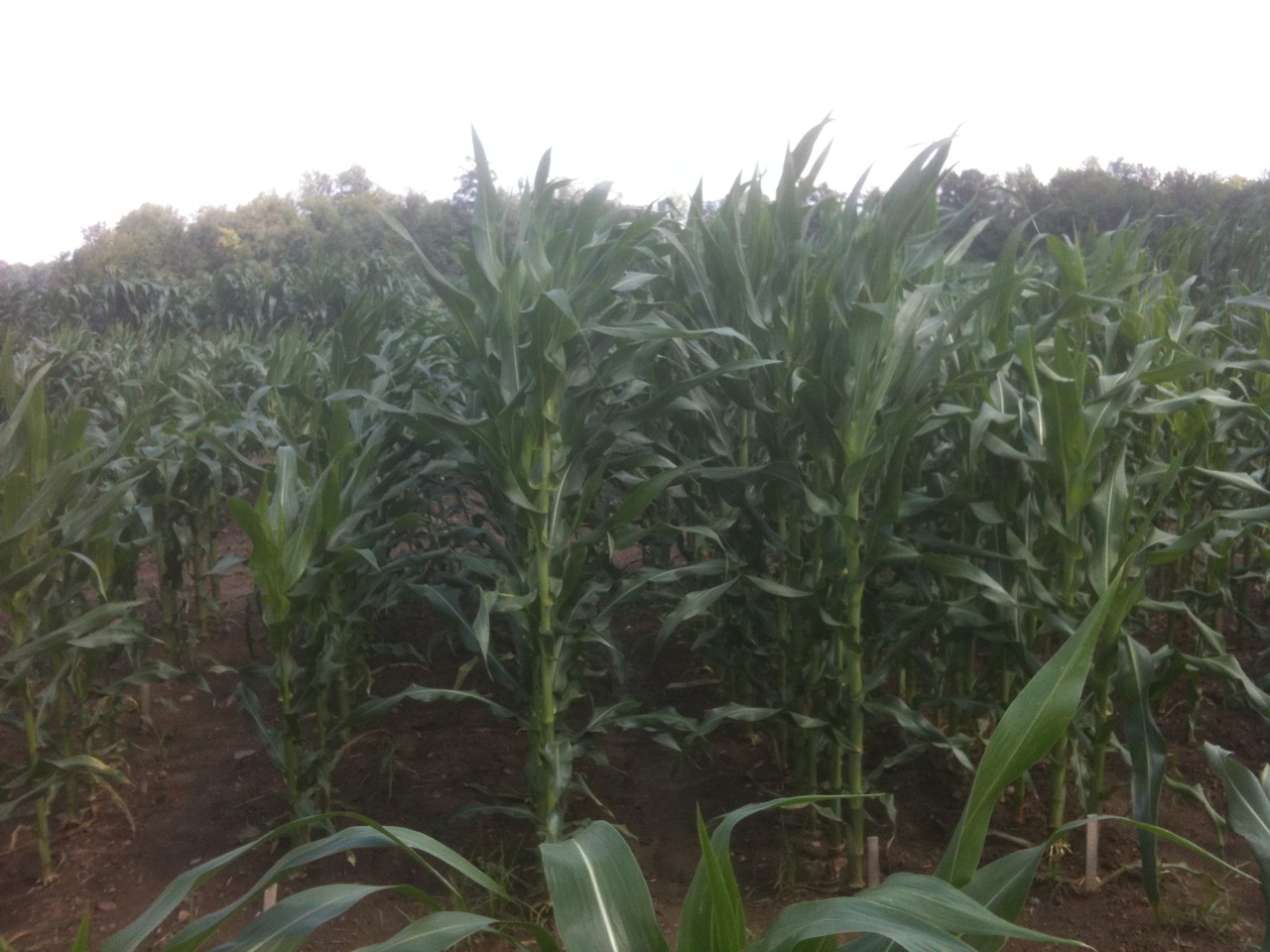
DroughtGardTM maize will be the first commercially available transgenic (GM) drought tolerant crop if it's released in 2013 as planned. Hybrid seed sold under this trademark will combine a novel transgenic trait (based on the bacterial cspB gene) with the best of Monsanto's conventional breeding program.

The Union of Concerned Scientists threw their usual wet blanket on the development. I think their gloomy assessment of transgenic drought tolerance is pretty biased but they do make a few good points that the public should understand. Primarily, "drought tolerance" does not mean that these plants can be grown with little to no water.

Tuesday, January 31, 2012

Herbicide Resistant Johnsongrass: Coming soon to a farm near you!

Pioneer and K State are jointly releasing a set of new herbicide resistant sorghum varieties, which will incorporate resistance to ALS and FOP herbicides. Ironically, these non-genetically modified varieties invoke one of the classic bogeymen of anti-GM thinkers - herbicide resistant weeds.

Thursday, October 13, 2011

Genetic Engineering vs. Breeding


"Many administrators, private and public, have decided that the future of plant breeding lies in genomics, relying on claims that molecular genetics has revolutionized the time frame for product development. ‘Seldom has it been pointed out that it is going to take as long to breed a molecular engineering gene into a successful cultivar as it takes for a natural gene’" - Goodman 2002

Wednesday, April 20, 2011

Ketchup and the Future of GM Food

It's 3 am local time and I'm wide awake, fixated on the challenge of brand differentiation in ketchup...

I recently spoke with one of the ketchup tomato breeders I know. Among other topics, he lamented the consumer's irrational fixation on price. He pointed out that most of us won't hesitate to grab a generic bottle of ketchup over a trusted brand for a difference of only 20 cents - which breaks down to no difference over the months it sits in your fridge: How do you sell a better product to a customer who's not willing to pay 1 cent more per week?

Tuesday, March 22, 2011

Better Chemistry Through Breeding

I recently had the opportunity to visit the fabled heart of the USDA-ARS empire: Beltsville.

I heard all about the tornado that knocked down all the campus trees, smashed in the greenhouses and threw doors down hallways a few years ago, visited their food sensory lab (a controlled environment where fruit samples are passed through a wall to waiting taste testers), and saw greenhouses packed full of cacao (where research on one of my favorite fungi, Crinipellis perniciosa, is co-funded by M&M Mars Inc.).

But I was there mostly to visit the pepper breeding program.

Tuesday, March 8, 2011

Plastic-Wrapped Bananas Not So Crazy?

The Daily Show ran a very funny bit on Del Monte's new single serving, plastic wrapped bananas the other night. Though they might not be as crazy as they sound...

h/t: Daily Mail:

These bananas, intended to be sold at convenience stores and gas stations, are wrapped in bags containing "Controlled Ripening Technology" (some sort of ethylene inhibitor?) that is said to extend shelf life up to 6 days. The bananas are placed in their bags while green and ripen more slowly than those piled on the shelf. They're being marketed as 'Natural Energy Snack on the Go,' for a U.S. cost of $1 each. 7-Eleven enthusiastically adopted these single serving bananas in thousands of stores last year due to customer disdain for brown bananas and the fewer (carbon/cost-intensive) deliveries that are required to stock produce with an extended shelf life.

It's also been pointed out that getting fresh, (culturally?)-appealing produce into quickie marts and bodegas in inner cities and isolated small towns might do more good alleviating food deserts than it does harm in generating extra trash.

Sunday, February 27, 2011

Transgenic Papayas, Take 2

I must have been busy last year when Genomic Gastronomy tried to engage my post on transgenic papaya because I didn't really give much of an answer...


So with apologies, here's more!

Saturday, February 19, 2011

GM Vegetable Oil

Hooray for Seed Today helping me to clear another story out of my "drafts" folder!

How GM Overcame Soy's Fatal Flaw

It's an exciting time in genetic engineering! I've long been bored by the simplicity of our contemporary transgenic crops and the single-minded focus on agronomic traits. Dropping in an herbicide or pest resistance gene is good for the environment and the farmer, but it doesn't visibly benefit the consumer very much and just doesn't impress me technically. Now, Monsanto and Pioneer's new soybean varieties are heralding a new era of more sophisticated metabolic engineering of traits that will directly benefit the public.

Thursday, January 20, 2011

Investing in Innovation

James (of the giant corn) recently posted on George Will's column on why we should be maintaining (or increasing) basic science research funding despite the economic downturn.*


Some people have the annoying habit of repeatedly dismissing the economic and public benefit of federal research funding. As an industry scientist, I thought I'd give my two cents.

Monday, January 3, 2011

US [transgene?] Testing Network

"With over 80% of the corn grown in the US genetically modified, and biotechnology companies phasing out non-GMO corn seed varieties, American farmers have fewer choices for finding non-GMO seeds to grow. 
As a result of this narrowing of farmer choice, a new initiative was launched in 2009 by Practical Farmers of Iowa (PFI) to address the problem. The US Testing Network (USTN) aims to develop and introduce new non-GMO corn hybrids in the market, while improving the quality and quantity of non-GMO corn hybrids available."
I haven't heard of any of these organizations before (and would be interested if you know something about them), but it sounds like an interesting project. I couldn't care less about avoiding transgenes, but I love the idea of small companies, public sector scientists and enthusiastic individuals working together to improve germplasm for niche markets too small for the big seed companies to serve. 

Do you have any experience with these organizations?

h/t: Seed Today

Thursday, December 2, 2010

Maize is a Machine

This is why farmers like hybrid seed. The parents on the left and right are inbred lines that have been self-pollinated for many, many years.* The two rows of much bigger plants in the middle are simply their hybrid offspring - they grow faster, produce higher yields and are tougher in the face of unfriendly environments.

Friday, November 12, 2010

The FAO made me do it!

I "attended" an email conference a year ago sponsored by the FAO:

Learning from the past: Successes and failures with agricultural biotechnologies in developing countries over the last 20 years.

I really enjoyed it. The vast majority of "presentations" were given by scientists working in the developing world and the topics ranged through sustainability, biotech and appropriate technology.

They've published the official summary of it now and asked the attendees to distribute it, so here you go.

(pdf)

Thursday, October 7, 2010

GM corn helps farmers who don't use it

Everyone's been waiting for long-term studies of GM crops - and now we have one!

The European corn borer was accidentally released in the U.S. in 1917. In recent years, it's managed to cost farmers $1 billion each year. Transgenic Bt corn was introduced in 1996, largely in order to deal with this pest. Thanks to the enthusiastic adoption of farmers, over 60% of U.S. corn now contains the borer-killing Bt gene...

Sunday, September 26, 2010

GM Salmon

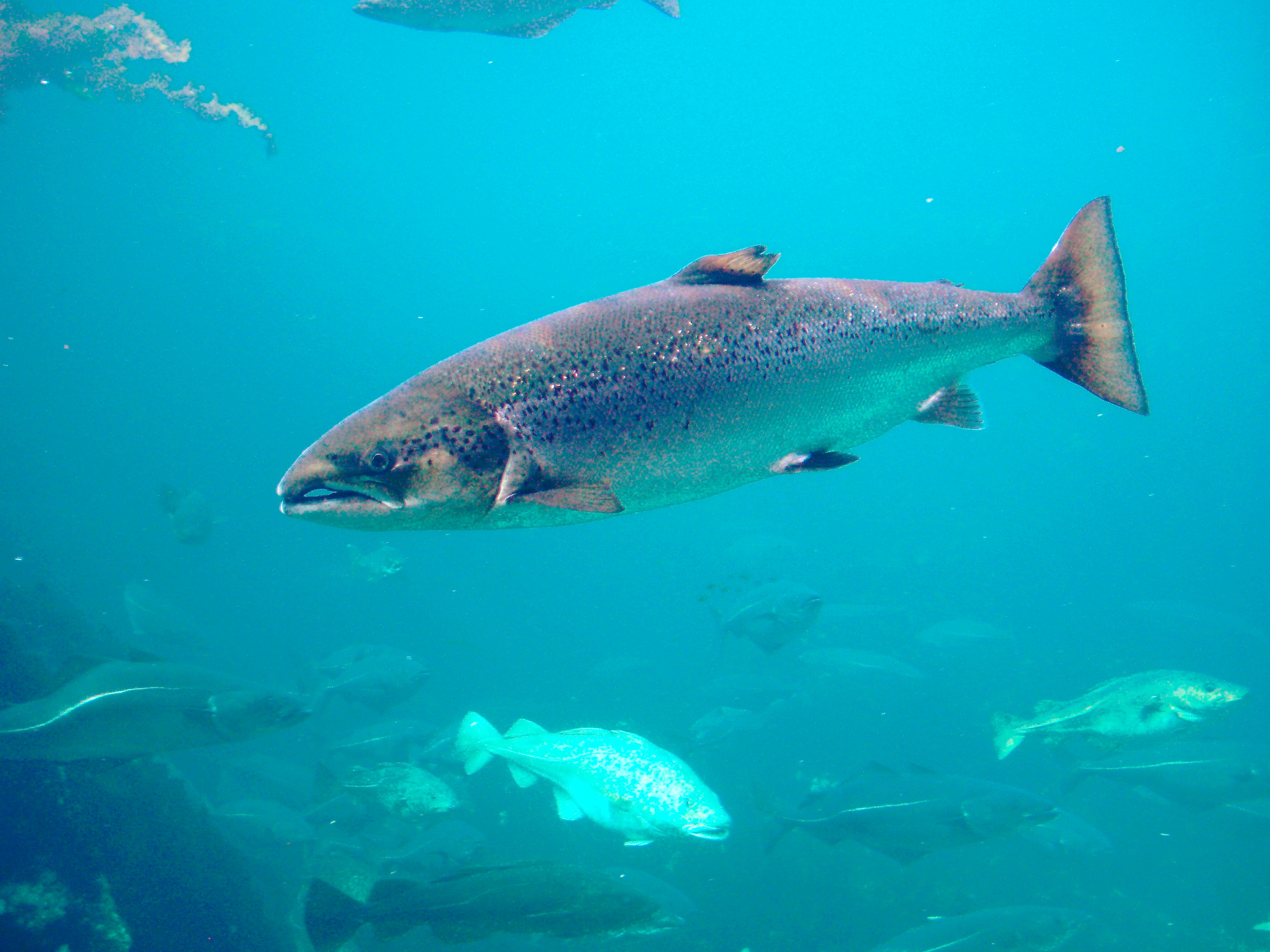
The new GM salmon may finally be approved.

The FDA is currently holding public hearings to discuss whether this particular breed should be approved for human consumption. These fish just might be our first genetically engineered livestock.

Friday, August 20, 2010

Evolving Pesticide Resistance

It's been estimated that genetic resistance to every pesticide that will ever be invented already exists in some microbe in some field, somewhere in the world (simply because there are so many individuals of each species). If you invent an incredible new spray that kills, say, Phytophthora infestans, you'd know that somewhere in the world there is a little P. infestans mycelium or spore that is already resistant. If you start spraying thousands and thousands of acres with your new pesticide, you may have a season or a few without late blight, but it's only a matter of time before this little guy gets into your field and finds a smorgasbord all for himself.

Monday, August 16, 2010

Monday, May 17, 2010

Chinese GM Cotton increases Fruit Pest

I imagine there will be some hoopla over this new Science article, so here's the cliff notes version:


  1. Cotton bollworm was a serious pest in China and was controlled with pesticide sprays
  2. Transgenic Bt cotton was introduced as a better management strategy for bollworm
  3. In the absence of regular sprays, a minor pest (the mirid bug) has become a real problem
This isn't a genetic engineering story - it's an integrated pest management story.

Kudos to the Chinese ag scientists for being on top of this! I hope they can come up with some cheap and safe solutions for their farmers.

Tuesday, May 4, 2010

a Call for Translational Genetic Engineering

Anti-GM activists love to point out how the much-hyped promises of genetic engineering never really came to pass, and they're absolutely correct - we've had this technology for 25 years and have almost nothing to show for it. The thing is, many of these game-changing, high-tech crops have been created, they just haven't been released.

Dennis Gonsalves, famous for the transgenic fruit that saved the Hawaiian papaya industry,* spoke recently on campus. The approach he used to create transgenic virus resistance has been proven for years and yet virtually no resistant crop varieties have been released - which is especially tragic given the many crippling viral diseases of the developing world.

Dennis' experiences illuminate some reasons behind this.

Don't wait for your variety to be perfect
The photo above is from his first greenhouse trial after transforming the papaya on the left with novel virus resistance. Conventional wisdom dictates that the next step would have been years of tests and breeding to produce the best possible version - but by then (with additional years required for regulation) the papaya industry would have been wiped out and there'd be no farmers left to adopt the resistant varieties.

Don't overthink it

Learning to navigate regulation was much more complex and difficult than Dennis could have imagined. He repeatedly asserted that it was best to be a little naive and overly optimistic and just jump in with both feet. There are always people who "know" that you won't be able to get your variety through regulation or that the public won't accept it, but the truth is you never really know until you try.

Don't miss cultural opportunities
He also emphasized opportunities that arise from cultural issues. Hawaiian papaya farmers were desperate for a cure for papaya ringspot disease and were eager to try the transgenic variety. Furthermore, this population (many of who were of Asian and Japanese birth) had a sophisticated understanding of the Japanese consumer and fruit market. Their industry organization was therefore able to make great inroads into the Japanese papaya market.

Although regulation of transgenic crops is extremely rigorous in Japan, it's also apolitical. When transgenic papayas were found in loads of putatively non-transgenic Hawaiian papayas twice, Japanese regulators worked with the Hawaiian industry to establish proper identity preservation systems. If the same had happened in Europe, it surely would have led to a scandal and a ban on all Hawaiian papayas. As it stands now, Japanese approval of the transgenic variety is expected this year, 12 years after the process was initiated.

Dennis also described his disappointing failure to get virus-resistant papaya approved in Thailand, where this fruit is a core part of the traditional diet. Despite promising field trials, interested farmers and a rapidly growing virus epidemic, the Thai government has vacillated with moratoriums on transgenic field tests (largely thanks to Greenpeace protesters who broke into one of his test plots). It's unclear whether the government will lift the current research ban.

Overall he emphasized the importance for scientists to take this process into their own hands and really be tenacious.* It's not easy to usher a variety through the regulatory process, but it's profoundly important. Paraphrasing Dennis, 12 years from now, no one will read your articles, but your crop may help feed a nation.


*I should emphasize that the Hawaiian papaya "industry" consists of indigenous and immigrant family farms, hand-tended on small plots of land.
**As opposed to giving away control to a company or, more commonly, never doing anything with it at all.
Interestingly, an audience members asked what difficulties he had with corporate patents (as they key technologies required for genetic engineering are all patented by companies such as Monsanto). He said that on the contrary, companies provided absolutely no obstacles to his work. This sector was trivial to the big seed companies anyway and, more importantly, they've learned over the past two decades that their profits depend on good communication with the public, especially with altruistic projects like transgenic papaya.

Monday, February 8, 2010

Monsanto in the Whole Earth Catalog?

No, not really - but Stewart Brand (of the Whole Earth Catalog) is now advocating genetic engineering and nuclear energy as tools for environmentalists.

I've requested his new book from my local library. I'll let you know what I think!

h/t: Forum

LinkWithin

Related Posts with Thumbnails