Saturday, August 15, 2009

Pam Ronald on GM Food Labeling

Here's a quick video of Pam Ronald (UC Davis Plant Pathology) on the labeling of "genetically modified, GM" food.

Knowing simply that a crop has been genetically engineered gives you no information about its safety. In order to make a safety judgment, the consumer would need to know what specific gene was put into the plant - but this raises complications.

Her example: You could label all non-organic U.S.-grown papaya as containing a small genetically engineered fragment of the papaya ringspot virus (the source of disease resistance that saved the industry) - but then you'd also have to label organic papaya that are naturally infected with the virus (and therefore have orders of magnitude more foreign viral nucleic acid and protein than the "transgenic" ones).

She didn't have a solution in this short sound bite, but she pointed out that alerting consumers that their foods are full of viruses would freak them out unnecessarily. Plant viruses can't infect humans.

Know your Salads!

My biggest problem with the organic movement is that it observes a complex, nuanced and largely unknown world, and quickly cuts it up into two categories: natural (safe + healthy), and synthetic (destructive and dangerous). This pre-Enlightenment philosophy is anti-intellectual, silly and dangerous.

Here
, Phillip Broadwith from ChemistryWorldBlog describes a case in Germany where a botanist noticed that pre-cut salad mixes at his local supermarket contained a poisonous weed that closely resembles arugula.

The state minister for consumer protectionism, Margit Conrad, warned:
"Not everything that looks like fruit and vegetable is edible...

No one should eat plants or parts of plants that have an unusual taste."
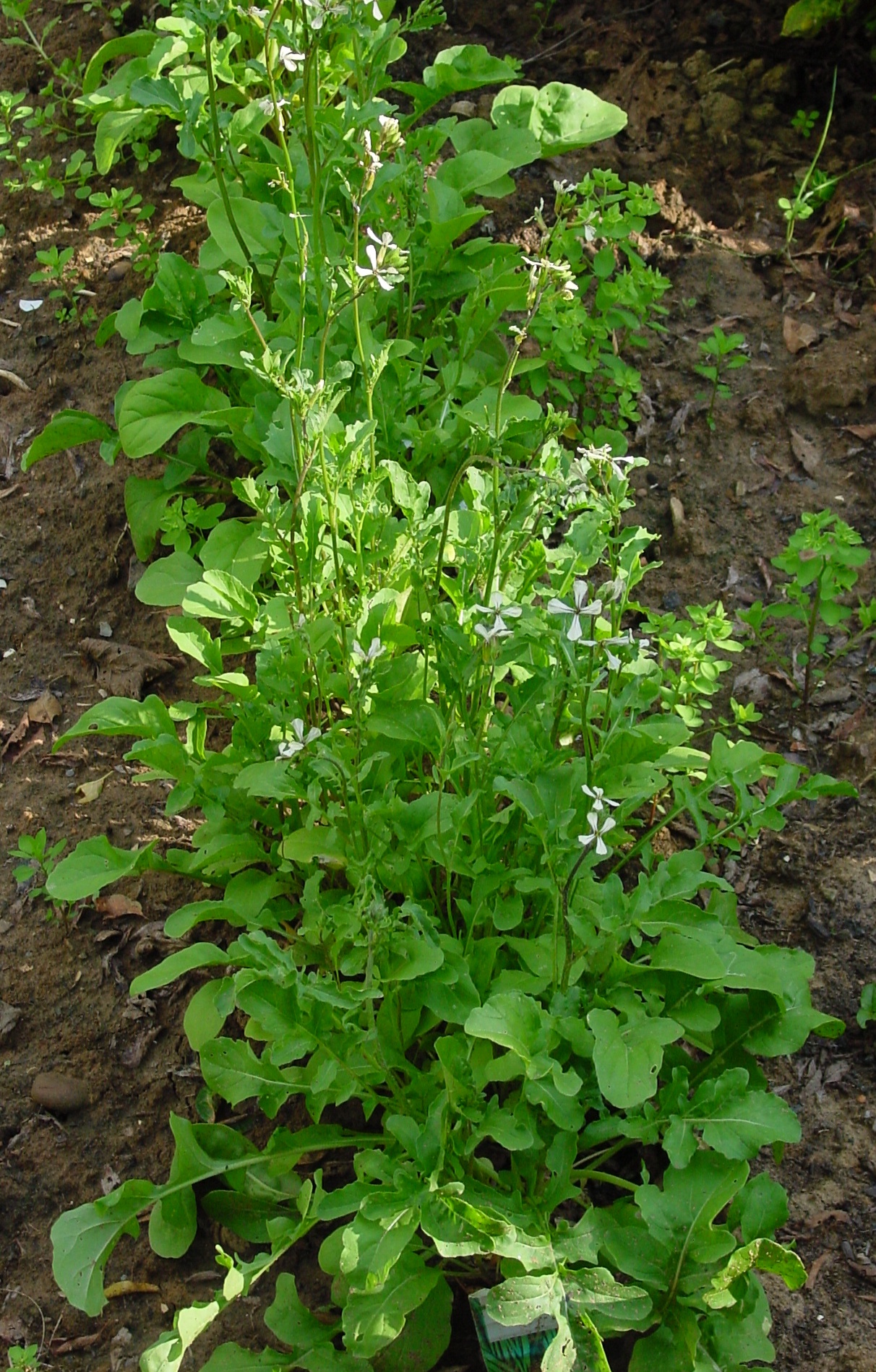
Here, by the way, is arugula and common groundsel.


Plants are ultimately identified by their flowers. Arugula makes the simple, 4-petaled flower that's typical of the Brassicaceae. Groundsel is in the same family as the dandelion (Asteraceae) and makes similar yellow flowers that produce fluffy white seeds.

The world is a complicated place and if you don't take the time to learn about it, you can get hurt.

Monday, August 10, 2009

Same Day Sweet Corn

For as much as corn gets a bad rap, it's really an excellent veggie - it's hard to beat the sweet crispness of corn picked within a few hours. No tasteless, chewy/mealy kernels here!

If you plan to plant your own corn next year, you'll want to have at least 100-200 square feet to assure good pollination (otherwise you'll have a lot of missing kernels on your cobs).

Maize breeders make specific cross by (Day 1) cutting the tip off of young ear shoots and covering both them and the pollen-shedding tassels with two small paper bags and (Day 2) after a burst of fresh, receptive silks (stigmas) have grown out, dump the pollen-filled tassel bag onto the new silks. This does two things - It assures that each little future kernel gets pollinated and prevents contaminating pollen from other corn varieties.

On another subject, my two little 3-foot salad boxes on my deck have been very successful this year. I bet one or two rows a little bigger than this (actually planted in the ground) could easily keep a person in salad most days of the week. I don't know if it's better to eat the old leaves (keeping the plant alive) or to pull up entire plants once they get really big and then re-seed. It'll be an experiment for my future yard!

Friday, August 7, 2009

How to Grow Tomatoes

I'm a big believer in heavily pruning fruit crops. I've never really looked into the research, but it's the way my mom taught me and it's worked out well so far.

Here's a picture of the less ragged of the two tomatoes I have on my deck. It's a lot smaller than it would be if it was in real soil and the nights didn't keep going into the 40s, but I'm pretty happy with it. Each of the two plants has over two dozen unripe fruit.

I aggressively pinch off all suckers (shoots that appear out of the axils) and flower buds until the plant forms one strong stem about 4 feet tall. If my plants were in the ground, I'd allow them to grow 2-3 of these stems, generally by sparing suckers near the ground when the previous stem reaches full height. Suckers supposedly sap the plant's strength and are structurally weak, and definitely lead to a bushy plant that shades its own leaves and forms a tangled haven for pests and pathogens. Notice how open the canopy is on the plant in the picture - almost all the leaf tissue catches the sun at the same time.

Once the plant reaches a decent size, I allow the plant to pour its energy into making flowers, which I pollinate myself if there don't seem to be many bugs around. New shoots generally push out flower buds just ahead of leaf buds. I try to pinch the leaf section off, sparing the flowers. If I catch a sucker after it's already started to put out leaves I generally pinch the smallest part of the bud (meristem and leaf primordia), allowing the leaves that the plant has already invested energy in to finish expanding.

The lowest leaves tend to drop towards the end of the summer, but this is beneficial as it allows air flow around the plant when cool, humid fall weather begins to encourage diseases. In some greenhouses, they actually train tomato plants up chains hung from pulleys in the ceiling. As the plant keeps growing taller, they lower the chain, allowing the leafless cane to coil on the ground.

When I get a yard, I plan to build post and wire trellises to rotate tomatoes, melons and legumes on, and stronger ones for grapes, cane berries and espalier fruit trees.

btw, I'm shocked and annoyed at how much Miracle-Gro I have to dump into my patio veggies to keep them green. I grew up on deep black forest loam and cultivated a pretty serious compost pile with my roommate in grad school. I never thought that my attention to soil was really that necessary.

LinkWithin

Related Posts with Thumbnails